У Reach Out, мы лічым, што вельмі важна адзначаць поспехі студэнтаў. Мы рады паведаміць пра яшчэ аднаго зорнага студэнта - Эма!
Эма ўяўляе сабой усё, чаго студэнты могуць дасягнуць упартай працай і імкненнем да дасканаласці. Настаўнікі прызнаюць Эму як вучаніцу, якая выдатна ставіцца да навучання, вельмі ўспрымальны да інструкцый, і мае надзвычай падтрымліваюць сям'ю, якая часта мае зносіны са сваімі настаўнікамі. У класе, Эма - уважлівы і ўважлівы слухач, які дастаткова ўпэўнена падзяліцца сваімі ідэямі, але дастаткова цярплівы, каб даць кожнаму сваю чаргу. Яна не супраць рызыкнуць, і можа ўнесці сваю індывідуальнасць у сваю працу.
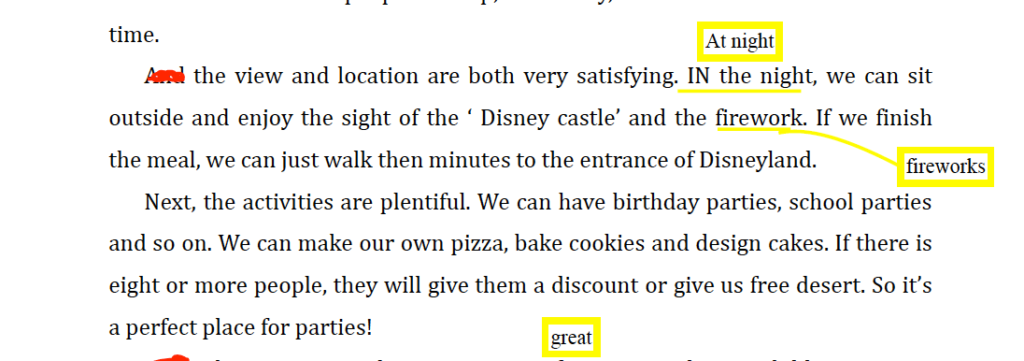
Зараз Эма навучаецца на нашым узроўні творчага чытання і пісьма 4 Вядома, і яна прадэманстравала сапраўдны дар у тым, што магла ствараць моцныя вобразы ў сваіх творах. У пачатку семестра, яна завяршыла агляд філіяла Blue Frog у Шанхайскім Дыснэйлэндзе.
Эма паказала сваю здольнасць крытыкаваць пэўныя аспекты месца, і развіваць свае ідэі, выкарыстоўваючы адпаведныя дэталі.
«Выгляд і размяшчэнне вельмі задавальняюць. Ноччу мы можам пасядзець на вуліцы і атрымаць асалоду ад віду на Дзісненскі замак і феерверк».
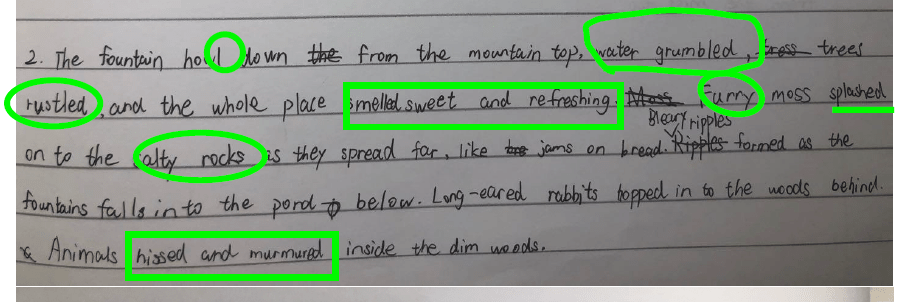
Як ішоў семестр, Эма паказала развіццё пісьменніцкіх навыкаў, і пачаў уключаць у сябе больш дасканалыя літаратурныя метады. У заданні па апісанню краявідаў, Эма змагла стварыць моцны вобраз, выкарыстоўваючы дакладны слоўнік і вобразную мову.
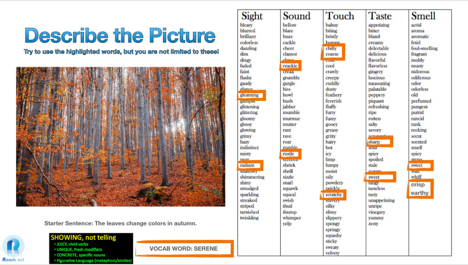
«Кухматы мох пырскаў на салёныя камяні, калі яны распаўсюджваліся далёка, як варэнне на хлебе. Калі фантан упаў у сажалку ўнізе, утварылася цьмяная рабізна».
Эма працягвала прымяняць атрыманыя ўрокі на працягу ўсяго курса, і яе здольнасці як пісьменніка ўзмацніліся. У нядаўнім заданні па напісанні фантастычнага апавядання, Эма абдумана і эфектыўна пабудавала абстаноўку і характар сваёй гісторыі.
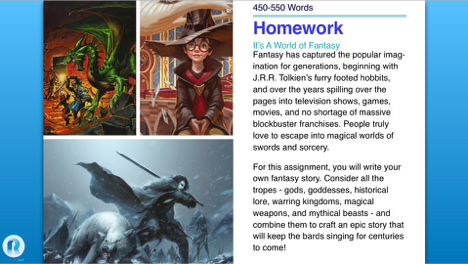
«Бліскучае сонца ззяла з акна і на мяккую, шаўкавістая прасціна. Каля адчыненага акна распускаліся салодкія кветкі цёплага колеру. Цьмяныя, але старанныя малюнкі віселі на асвяжальнай зялёнай, як багавінне, сцяне».
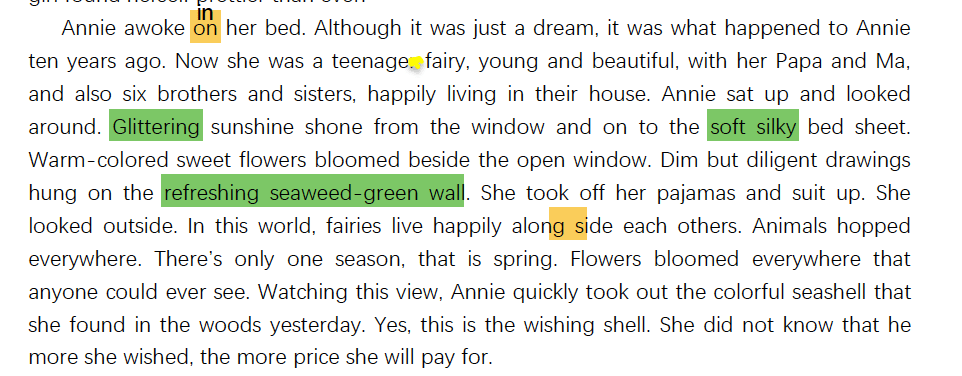
Як бачыце, Эма паказвае характарыстыкі перспектыўнай маладой пісьменніцы. Яе рашучасць удасканальвацца, і ўважлівае прымяненне атрыманых урокаў дапамаглі падняць яе напісанне на больш прасунуты ўзровень.
Дзякуй Эма, за тое, што такая ЗОРКА! Мы з нецярпеннем чакаем вашага росту на працягу доўгага часу. Мы ведаем, што гэта толькі пачатак бліскучага падарожжа.
Як выхавальнікі, нам часта задавалі пытанне, «Як я магу прымусіць сваё дзіця перастаць чытаць коміксы?Бацькі непакояцца, што коміксы не маюць адукацыйнай каштоўнасці, не з'яўляюцца дастаткова акадэмічна строгімі, ці горш за ўсё, пустая трата часу свайго дзіцяці. Да гэтага, наш адказ іх звычайна здзіўляе, і гэты адказ, «Няхай чытаюць коміксы!»
Зразумела, што бацькі будуць крыху занепакоеныя, бо існуе меркаванне, што коміксы прызначаны выключна для цікавага чытання, аднак, коміксы маюць шмат пераваг, акрамя дапамогі бавіць час.
Коміксы і графічныя раманы не з'яўляюцца новай формай пісьма. Вядома, імі карысталіся многія на працягу некалькіх пакаленняў. З гадамі, жанр змяніўся ў жанр са значнай глыбінёй і сэнсам, таму мы заклікаем бацькоў не толькі дазваляць сваім дзецям чытаць коміксы, але і падтрымліваць іх у гэтым.
Вось нашы галоўныя прычыны, па якіх варта чытаць коміксы (асабліва летам!):
Для студэнтаў, якія не з'яўляюцца носьбітамі англійскай мовы, коміксы даюць ім выдатны спосаб пачаць атрымліваць асалоду ад англійскай літаратуры. Для многіх дзяцей, задача перайсці ад падручніка англійскай мовы да рамана можа быць вельмі складанай, але коміксы могуць стаць для іх неабходным мостам для ўмацавання ўпэўненасці, а таксама бегласці чытання. Візуальныя сігналы на малюнках дазваляюць студэнтам глыбей зразумець сюжэт і персанажаў, а таксама новую лексіку. Акрамя таго, ён знаёміць іх з эфектыўнымі літаратурнымі прыёмамі, такія як анаматапея (думаць ваеннапалонны! СМАКАЦЬ! МАСШТАБ!) і ідыёмы (ілюстрацыя, якая паказвае значэнне ідыёмы like, «Кот дастаў табе язык?» мае нашмат больш сэнсу, чым разаграванне ідыёмы самастойна!).

2.Павышэнне высновы
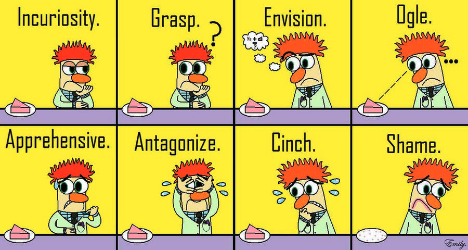
Вывад - гэта ключавы навык чытання, з якім многія студэнты пакутуюць падчас стандартызаваных ацэнак чытання. Вывад адбываецца, калі мы робім высновы на падставе прачытанага. Некаторыя прыклады пытанняў, з якімі студэнты сутыкнуцца падчас выканання заданняў на разуменне прачытанага або ацэнкі, такія як, «Як адчуваў сябе персанаж, калі?», «Якую выснову вы можаце зрабіць пра…» і «Які урок быў зроблены ў апавяданні?Коміксы патрабуюць, каб студэнты «чыталі паміж радкоў», каб зрабіць вывад пра інфармацыю, якую звычайна распавядае апавядальнік у рамане., таму яны могуць атрымаць шмат каштоўнага вопыту ва ўмацаванні гэтага навыку, чытаючы коміксы.
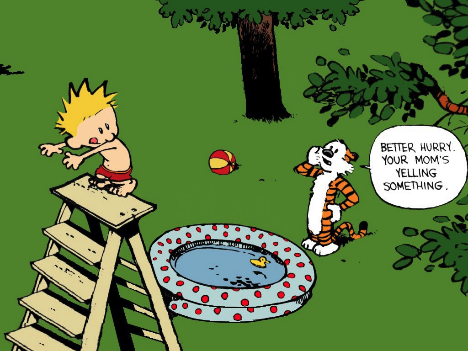
3.Сіла слова!
Часта ў коміксах і графічных раманах, пісьменнікі ўключаюць даволі развітую лексіку, як частка сюжэтнай лініі, так і ў імёнах персанажаў. У 2016 на сусветна вядомым Comic-Con у Сан-Дыега, Каліфорнія, Удзельнік дыскусіі педагогаў абмеркаваў сілу коміксаў у папаўненні слоўнікавага запасу студэнтаў. Джэймс Бакі Картэр, аўтар Пабудова сувязі пісьменнасці з графічных раманаў сказаў, «У вас ёсць Колас, і ён такі вялікі, гіганцкі металічны хлопец. Вы сапраўды добра разумееце, што азначае слова калос, і гэта добрае слова за 10 цэнтаў. Сіла Баншы крычыць. У вас ёсць гэтыя сімвалы, якія ўвасабляюць слоўнікавыя словы, якімі яны з'яўляюцца. Гэта тое, што з'яўляецца цікавым спосабам вывучыць новыя словы, у дадатак да кантэкстуальных падказак».
Прачытаўшы гэта, вы, магчыма, захочаце дазволіць свайму дзіцяці адразу пагрузіцца ў чытанне коміксаў або графічных раманаў! Гэта музыка для нашых вушэй. Калі вы не ведаеце, з чаго пачаць, у нас ёсць некалькі любімых навучэнцаў, якія можа паспрабаваць ваша дзіця!
Сабака Дэйва Пілкі

Чалавек-павук Майлза Маралеса Джэйсана Рэйнальдса

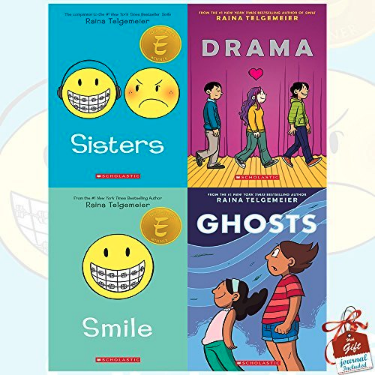
Усмешкі, Сёстры, Прывіды, Драмы і іншыя апавяданні Райны Тэльгемайер
Bone Джэфа Сміта

Шукаеце больш летніх магчымасцей для чытання для вашага дзіцяці? Звяжыцеся з адным з нашых кансультантаў па адукацыі, каб атрымаць дадатковую інфармацыю аб нашых летніх курсах чытання. Мы з нецярпеннем чакаем чытання з вашым дзіцем!
Надышоў сезон экзаменаў, і гэта можа быць вельмі напружаны час года як для студэнтаў, так і для бацькоў. У Reach Out мы хочам зрабіць усё магчымае, каб палегчыць трывогу перад экзаменам, прапаноўваючы некалькі унікальных парад па вывучэнні, якія вы, магчыма, не спрабавалі.
Традыцыйная мудрасць навучання часта прытрымлівалася многімі бацькамі і настаўнікамі з добрых намераў, аднак, калі мы паглядзім на некаторыя цікавыя падыходы, заснаваныя на даследаваннях, мы ўбачым, што існуе мноства эфектыўных спосабаў навучання! Заўсёды добра спрабаваць новыя рэчы, асабліва для дзяцей. Яны могуць выпрабаваць новыя спосабы рабіць рэчы, калі яны маладыя, і калі яны крыху падраслі, яны могуць выбраць спосаб, які найбольш адпавядае іх асабістым патрэбам і стылю.
зараз, давайце паглядзім на тры унікальныя спосабы вывучэння.

Разнастайнасць - гэта аздабленне жыцця, нават падчас вучобы
Для многіх, шмат гадоў нам казалі, што для таго, каб добра вучыцца, мы павінны вучыцца кожны дзень у адным і тым жа месцы; ціхае месца, добра асветлены, і мае ўсе нашы матэрыялы. Хоць гэта можа быць праўдай на працягу некаторага часу, які мы вывучаем, даследаванні паказваюць, што наш мозг працуе лепш, калі мы змяняем месца, дзе вучымся. Даволі дзіўна, справа?
У даследаванні, праведзеным яшчэ ў 1978, навучэнцы каледжа атрымалі 40 слоўнікавыя словы для вывучэння. Адной групе было загадана вывучыць спіс двойчы ў адным месцы. Іншай групе было загадана вывучыць спіс у двух розных месцах. Тое, што знайшлі, было, група, якая змяняла месца навучання, насамрэч лепш запамінала словы пазней. Цяпер чаму гэта? добра, наш мозг часта падключаецца да інфармацыі на аснове навакольнага асяроддзя, таму чым больш мы вар'іруем наша асяроддзе, тым больш мы даем нашаму мозгу шанец захоўваць інфармацыю, бо яна будзе прымацоўвацца да большай колькасці рэчаў. Гэта таксама можа быць прычынай адной методыкі візуалізацыі, дзе чалавек візуалізуе рэчы, якія хоча запомніць, у пэўныя месцы ў асяроддзі, з якім ён знаёмы, таксама можа быць настолькі эфектыўным. Для студэнтаў, простае пераключэнне асяроддзя можа зрабіць трук!
Атрымлівайце задавальненне!
Некаторыя бацькі могуць памылкова падумаць, што іх дзіця смяецца або хвалюецца падчас навучання або вучобы, яны могуць марнаваць свой час. Аднак, гэта не абавязкова так.
Як бацька, на працы ці ў офісе час ад часу могуць праводзіцца спецыяльныя семінары. Майстар-класы звычайна выкарыстоўваюцца як інструмент, які дапаможа вам даведацца пра новую стратэгію, ідэя, або інфармацыя, якая дапаможа вам даведацца больш на працы. Гэтыя заняткі часта праводзяцца людзьмі, якія спецыялізуюцца на стварэнні матывацыйных і натхняльных семінараў, якія ажыўляюць і зараджаюць энергіяй супрацоўнікаў. Дні могуць быць доўгімі і напружанымі, але калі яны зроблены правільна, супрацоўнікі могуць сысці з упэўненасцю ў сваіх новых ведах і навыках.
Такія ж пярсцёнкі і для моладзі. Прадстаўленне гульні і забавы як спосабу падрыхтоўкі да іспытаў не толькі прымушае вашага дзіцяці ўсміхацца, але даследаванні паказваюць, што забаўка падчас навучання актывізуе пэўныя кагнітыўныя рэсурсы, звязвае ўзнагароды і задавальненне з навучаннем, умацоўвае і пашырае сеткі памяці, і перамыкае абстрактнае мысленне і засяроджаную ўвагу.

Тэхніка Pomodoro
Застаючыся засяроджаным, выкананне задання і матывацыя на выкананне пэўных дзеянняў можа быць цяжкім як для дарослых, так і для дзяцей. Вы калі-небудзь адчувалі, што гадзінамі глядзелі ў экран кампутара?, але дасягнута вельмі мала? Ці, магчыма, у вас ёсць тэрмін праз некалькі дзён, але толькі набліжаюцца да фінішу? Гэта не дзіўна, як паказваюць даследаванні, наш розум мае тэндэнцыю блукаць да 20% таго часу, магчыма, нават больш для маладых людзей.
Адну цікавую тэхніку стварыў студэнт каледжа Франчэска Чырыла, каб дапамагчы яму заставацца засяроджаным, і гэта тэхніка Pomodoro, які атрымаў сваю назву ад таймера ў форме памідора, які выкарыстаў Чырыла падчас тэставання гэтай стратэгіі на сабе. Як гэта працуе, вы ўсталёўваеце таймер 25 хвілін, які час працы. Затым усталюйце яго зноў для 5 хвілін, што час перапынку. Гэта выдатны час, каб падняцца, расцягвацца, пакатацца па хаце, пагладзіць котку, або выпіць вады ці перакусіць. Час пасля перапынку скончыўся, усталюйце таймер на іншы 25 хвілін і паўтарыць!
Аказваецца, гэтая стратэгія падмацавана навуковымі доказамі, як даследчыкі прыйшлі да высновы, што кароткія перапынкі дапамагаюць падтрымліваць вашу ўвагу на правільным шляху. Гэта можа быць звязана з тым, што кагнітыўная нуда можа прывесці да незаангажаванага розуму, гэта апошняе, што вы хочаце, калі рыхтуецеся да важнага іспыту.
Мы спадзяемся, што вам спадабалася вывучэнне гэтых унікальных парад па вывучэнні гэтак жа, як і нам! Жадаем вашаму дзіцяці ўдачы на экзаменах у гэтым месяцы. Цзяю!
Мы ведаем, што так шмат можам зрабіць, каб выхаваць і навучыць нашых дзяцей, таму, як бацькі, мы часта прыкладаем усе намаганні, каб запоўніць іх час карыснымі заняткамі і заняткамі. Чаму мы гэта робім? Вядома, па многіх прычынах, але галоўная мэта - забяспечыць іх будучы поспех. Бацькі спадзяюцца, што іх дзеці будуць яшчэ больш паспяховымі ў жыцці, чым яны самі. Поспех, вядома, з'яўляецца суб'ектыўным, і кожны з нас можа мець сваё ўласнае вызначэнне поспеху. Увогуле аднак, мы маглі б пагадзіцца, што поспех уключае пачуццё задавальнення ў асабістым жыцці, а таксама пачуццё кар'ернага задавальнення і фінансавай бяспекі.
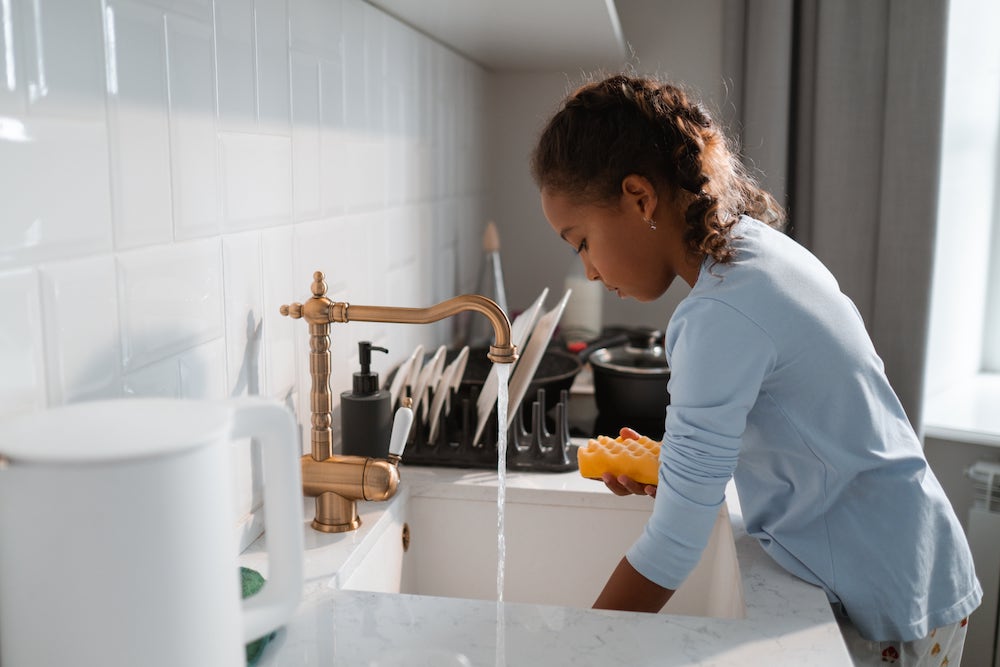
Нядаўна ў сацыяльных сетках быў распаўсюджаны інтрыгуючы TED Talk, у якім былы дэкан першакурсніка Стэнфардскага універсітэта, Джулі Літкот-Хеймс, цытуе дадзеныя з Гарвардскага грантавага даследавання, якое суадносіць прафесійны поспех у жыцці з асобамі, якія ў дзяцінстве займаліся хатнімі справамі. Не футбольныя трэніроўкі, не вывучэнне мовы, не жывапіс, але клопаты.
Дзіўна дакладна?
Многія з нашых дзяцей, якія растуць у вялікіх гарадах, могуць ніколі не ведаць, што такое мыць посуд, памыць акно, або мыць падлогу. Мы можам адчуваць, што ёсць больш важныя справы, каб павысіць іх веды і характар. Літкот-Хеймс тлумачыць, што тыя дзеці, якія пэцкаюць рукі, аднак, могуць дасягнуць такога ўзроўню поспеху ў жыцці, які пераўзыходзіць іх аднагодкаў, якія не займаюцца клопатамі. Гэта таму, што гэта вучыць студэнтаў, як унесці свой уклад і актывізаваць працу, калі трэба зрабіць працу, і тое, што выконвае «грубую працу», з якой іншыя могуць здзекавацца, таму што гэта лепшае для ўсіх, гэта тое, што заўважаюць на працоўным месцы.
Працоўныя месцы тых, хто браў удзел у Гарвардскім грантавым даследаванні, былі прыкметнымі, напрыклад, Белы дом, дзе працаваў прэзідэнт Кэнэдзі, і офіс рэдакцыі, дзе Бэн Брэдлі сядзеў у якасці рэдактара The Washington Post. Можна меркаваць, што іх бацькі, як і мы, прыйшлося падштурхоўваць і маліць, каб выканалі хатнія справы, і прыняць гэта, нават калі яны былі зроблены, яны, магчыма, не былі зроблены добра; і гэта нармальна.
Важная рэч, як адзначае Літкот-Хеймс, заключаецца ў тым, што займаючыся хатнімі справамі, дзеці разумеюць, што яны, «...трэба рабіць працу жыцця, каб быць часткай жыцця.» Яны разумеюць, што жыццё не адбываецца з імі проста так, і для іх, але з іх.
Калі вашы дзеці ўжо займаюцца хатнімі справамі ў рамках штодзённага летняга распарадку, брава! Вы на правільным шляху. Калі не, не трэба панікаваць. Ніколі не позна ўвесці ў жыццё нашых дзяцей абавязкі. Вось некалькі парад, якія дапамогуць вам пачаць!

Няхай яны будуць часткай гэтага
Пры ўвядзенні канцэпцыі вашых дзяцей, якія выконваюць хатнія справы, каб дапамагчы, правядзіце «сямейную сустрэчу», дзе ўсе прысутнічаюць, каб абмеркаваць, чаго чакаюць ад вашых дзяцей і чаму. Вы можаце папрасіць дзіцяці дапамагчы вам скласці спіс спраў, з якімі ён мог бы дапамагчы па хаце. Яны могуць здзівіць вас сваім энтузіязмам, бо некаторыя дзеці вельмі захапляюцца хатнімі справамі, таму што яны адчуваюць сябе моцнымі і карыснымі (дзве рэчы, якія мы часта хацелі б адчуваць, як дарослыя).
Game-ify It
Каб усё было весела, таму што задавальненне робіць усё лепш, вы ці ваша дзіця можаце напісаць хатнія справы на палачках ад эскімо, і кожны дзень ваша дзіця можа выбраць адну палачку са слоіка. Гэта будзе іх праца на дзень! Калі ў вас дома больш аднаго дзіцяці, вы заўсёды можаце ператварыць уборку ў спаборніцтва, усталяваўшы таймер і паглядзеўшы, якое дзіця можа прыбраць больш за ўсё цацак за зададзены прамежак часу, напрыклад.
Узнагародзьце гэта
Як бацькі, мы ўзнагароджваемся за наш уклад у працы з зарплатай. Хіба нашы дзеці таксама не павінны быць узнагароджаны за іх цяжкую працу? Адна з ідэй заключаецца ў тым, што калі ваша дзіця выканае ўсе свае абавязкі на працягу тыдня, ён ці яна можа выбраць маленькую цацку з «скарбонкі», напоўненай маленькімі цацкамі. Іншым варыянтам можа быць тое, што ваша дзіця пастаянна выконвае хатнія справы на працягу месяца, яны могуць выбраць дадатковую адмысловую сямейную прагулку.
Навучыць нашых дзяцей выконваць хатнія справы не заўсёды проста, але патэнцыйныя перавагі вартыя часу і намаганняў. Мы спадзяемся, што нашы парады былі вам карысныя, і што яны могуць дапамагчы стварыць станоўчы вопыт для вас і вашага дзіцяці. Шчаслівай уборкі!
Мы рады аб'явіць аб стварэнні новага летняга кніжнага клуба, толькі для бацькоў! Лета - ідэальны час, каб прачытаць кнігу, якую вы заўсёды хацелі прачытаць, але не было часу. Гэтым летам, мы запрашаем вас далучыцца да нас у чытанні Як размаўляць, каб дзеці слухалі, і слухаць, каб дзеці гаварылі.
Мы ведаем, што не заўсёды проста звязацца з нашымі дзецьмі з-за патрабаванняў школы, праца і штодзённае жыццё. Часам нашы трывогі з нагоды будучыні перашкаджаюць жыць нашым жыццём прама цяпер. Аднак, адна рэч, якую мы можам гарантаваць, гэта тое, што мы ніколі не атрымаем іншага шанцу перажыць дзяцінства з нашымі ўласнымі дзецьмі, і мы не хочам упусціць гэты каштоўны час. Такім чынам, як мы можам атрымаць максімум ад гэтага і весці значныя размовы з нашымі дзецьмі, якія ўмацуюць нашу сувязь і дапамогуць нашым дзецям адчуваць падтрымку? Гэта вялікія пытанні, якія ўзнікаюць у многіх з нас.
Каб дапамагчы нам адказаць на гэтыя важныя пытанні, мы запрашаем вас далучыцца да чытання адной з самых папулярных кніг па выхаванню бацькоў усіх часоў, напісана Адэль Фабер і Элейн Мазліш. Як размаўляць, каб дзеці слухалі Слухайце, каб дзеці размаўлялі, які вучыць нас, як прымаць пачуцці нашых дзяцей, бо, не робячы гэтага, мы маглі б мімаволі выклікаць дрэнныя паводзіны. Гэта таксама вучыць нас пазітыўным спосабам заахвочвання супрацоўніцтва, а таксама незалежнасць, аўтаномія, і ўпэўненасць у сабе. Гэта ўсе інгрэдыенты, неабходныя для выхавання пазітыўных адносін бацькоў і дзяцей, якія сапраўды дапамогуць вырасціць нашых дзяцей упэўненымі і здольнымі дарослымі.

Як гэта будзе працаваць?
Першы крок - звязацца з адным з нашых адукацыйных кансультантаў для рэгістрацыі. Рэгістрацыя БЯСПЛАТНАЯ і адкрыта для ўсіх! Пачынаючы з 1 ліпеня, мы створым групавы чат, у якім будзе адбывацца вывучэнне і абмен зместам кніг. Ліндсі Файн, наш менеджэр па адукацыі, таксама будзе далучацца да групы ў якасці бацькоў, бо яна маці дваіх хлопчыкаў, ва ўзросце 4 і 6, хто будзе вучыцца разам з вамі. Яна таксама будзе дапамагаць весці штотыднёвыя дыскусіі.
Кнігу можна знайсці на англійскай і кітайскай мовах і лёгка атрымаць у друкаваным выглядзе, электронная кніга, або фарматы аўдыякніг.
Тады ёсць два варыянты таго, як вы хочаце прыняць удзел:
Расклад чытанняў наступны:
Тыдзень 1: раздзелы 1 & 2
Тыдзень 2: раздзелы 3 & 4
Тыдзень 3: раздзелы 5 & 6
Тыдзень 4 раздзелы 7 & Пасляслоўе
У канцы месяца, мы правядзем онлайн-семінар пад кіраўніцтвам школьнага кансультанта, Рэгіна Венер. На майстэрні, Рэгіна падзеліцца дадатковай інфармацыяй і стратэгіямі, якія вы можаце выкарыстоўваць для ўмацавання адносін з дзіцем.
Пра Рэгіну Венер

Рэгіна Венер з'яўляецца ліцэнзаваным школьным кансультантам, якая працавала з вучнямі сярэдняй школы больш 16 гадоў. Родам з ЗША, яна жыве з мужам і 2 дзяцей, узростаў 10 і 12, у Пекіне, Кітай.
Рэгіна працуе ў Заходняй акадэміі Пекіна (WAB), разнастайная міжнародная школа. Вялікая частка працы школьнага кансультанта - гэта дапамагаць вучням даведацца пра сябе і іншых па меры іх росту. Рэгіна таксама праводзіць штомесячныя бацькоўскія кавярні, каб сабраць бацькоў, каб даведацца больш пра змены ў развіцці сваіх дзяцей і пра тое, як мець зносіны ў гэтыя пераходныя часы.
Звяжыцеся з намі сёння, каб далучыцца!
Дапамога вашаму дзіцяці ў вывучэнні новай лексікі
Даследаванні паказваюць, што калі мы хочам, каб студэнты дасягнулі поспеху ў акадэмічным кантэксце, на важных ацэнках і высокіх іспытах, а таксама іх будучую кар'еру, мы павінны дапамагчы ім развіць свой слоўнікавы запас. Прычына таму такая: наша разуменне новай інфармацыі непасрэдна звязана з нашым разуменнем слоўнікавага запасу, які выкарыстоўваецца для перадачы гэтай новай інфармацыі.
Для студэнтаў, павелічэнне іх слоўнікавага запасу - адзін з ключоў да поспеху ў авалоданні мовай; тым больш слоў мы ведаем, чым больш слоў мы разумеем, і чым больш слоў мы можам выкарыстоўваць у сваім пісьме, каб зрабіць яго больш уплывовым і эфектыўным. Аднак, вывучэнне лексікі цяпер разглядаецца як стомны або няўлоўны працэс. Часам бацькі не ведаюць, як накіроўваць сваіх дзяцей, асабліва таму, што наш падыход да вывучэння лексікі можа значна адрознівацца ад таго, як вывучалі яго бацькі ў школе.
Не хвалюйцеся, Reach Out тут, каб дапамагчы! Давайце вывучым набыццё слоўнікавага запасу (працэс запамінання і ўжывання новай лексікі), і мы раскажам вам, як вы можаце дапамагчы вашаму дзіцяці папоўніць свой слоўнікавы запас!

Размова пра гэта!
Гэта можа здацца занадта простым, але калі справа даходзіць да вывучэння новых слоў, адзін з эфектыўных спосабаў зрабіць гэта маладымі людзьмі - размаўляць з іншымі. Дзеці лепш засвойваюць новыя словы, калі яны знаходзяцца ў кантэксце, напрыклад, у размове на пэўную тэму. Яны могуць зрабіць выснову пра значэнне новых слоў на аснове таго, як яны выкарыстоўваюцца разам з іншымі словамі, з якімі яны ўжо знаёмыя..
Верагодна, ваш дзіця неаднаразова перабіваў вас, калі вы ўжывалі незнаёмую лексіку, і яны з цікаўнасцю пыталіся, «Што значыць катастрофа?” Магчыма, вы мелі на ўвазе стан іх спальні (як у ім поўны бардак), і скарыстаўшы хвілінку, каб растлумачыць ім мноства значэнняў катастрофы, вы не толькі навучыце іх новаму слову для апісання бруднага пакоя, але таксама няўдача або натуральная з'ява, напрыклад, стыхійнае бедства.
Такім чынам, размова з дзіцем - выдатны спосаб навучыць яго новым словам!
Даследуйце гэта!
Студэнты звычайна разумеюць, што яны могуць выкарыстоўваць слоўнік або перакладчык, калі сустракаюць слова, якое ім невядома, але часам нават вызначэнне слова можа пакінуць у іх больш пытанняў, чым адказаў.
З нашага вопыту, многія студэнты не выкарыстоўваюць адзін вельмі важны інструмент для вывучэння і прымянення новай лексікі, і гэты інструмент - тэзаўрус! Калі вы заўважылі, што ваш дзіця злоўжывае словам у размове або на пісьме, напрыклад, «прыгожы», «мілы», «добра», або «дрэнна», затым знайдзіце час, каб паказаць ім, як карыстацца вэб-сайтам, напрыклад thesaurus.com шукаць гэтыя словы. Калі яны будуць шукаць такое слова, як "прыгожая", яны ўбачаць, што ёсць так шмат цікавых і унікальных слоў, якія можна выкарыстоўваць замест гэтага! я
З нашага вопыту, студэнтам вельмі падабаецца выкарыстоўваць новую лексіку, і адчуваюць сябе ў стане ведаць, што ёсць інструмент, які дапаможа ім зрабіць свае словы мацней.
гуляць!
Весяліцца падчас навучання - гэта не толькі тое, што настаўнікі робяць, каб зрабіць вучняў шчаслівымі, неўралогія даказала, што гэта эфектыўны спосаб дапамагчы студэнтам вучыцца больш і глыбей. Даследаванні паказваюць, што, калі студэнтаў адначасова стымулююць і выклікаюць, іх мозг вылучае дофамін. Допаміна - гэта нейрамедыятар, які стымулюе цэнтры памяці і спрыяе вылучэнню ацэтылхаліну., што павышае канцэнтрацыю ўвагі.
На нашых курсах тут, у Reach Out, навучанне лексіцы - важная частка кожнага ўрока. У нас таксама ёсць курсы, якія запускаюцца гэтым летам, Узроўні канструктара слоўніка 1-3, у якім мы будзем сканцэнтраваны выключна на тым, каб дапамагчы вашаму дзіцяці пашырыць яго слоўнікавы запас новымі складанымі словамі. У той час як выбраныя словы прапануюць выклік, такія інструменты, як Quizlet і такія гульні, як Guess Who і Sentence Racer, даюць студэнтам магчымасць узаемадзейнічаць змястоўна і займальна.

Адкуль мы ведаем, што гэтыя метады эфектыўныя? Таму што наш вопыт дзесяцігоддзяў, і вывучэнне педагагічнай псіхалогіі і метадалогіі навучылі нас, як студэнты вучацца лепш за ўсё!
Мы хацелі б дапамагчы вашаму дзіцяці вывучыць новую лексіку, як адзін са спосабаў стаць больш эфектыўным і паспяховым чытачом, пісьменнік, і дынамік. Каб даведацца больш аб тым, як мы можам дапамагчы, звяжыцеся з адным з нашых кансультантаў па адукацыі сёння!
If you are looking for a more individualized educational service, Reach Out offers 1-on-1 services with our expert educators!
What do We Offer?
Our teachers offer a wide range of 1-on-1 subjects including English, Social Sciences, and Maths.
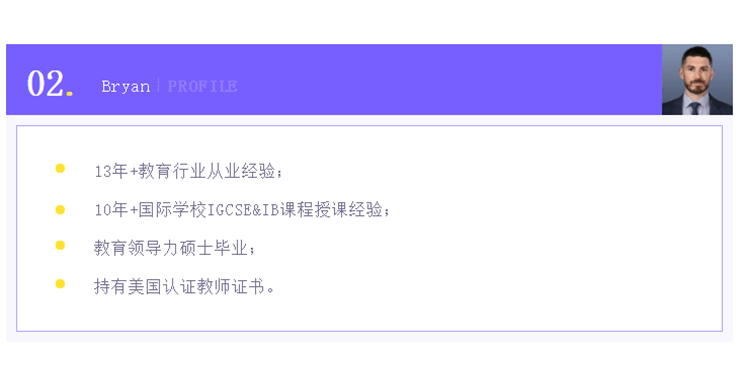
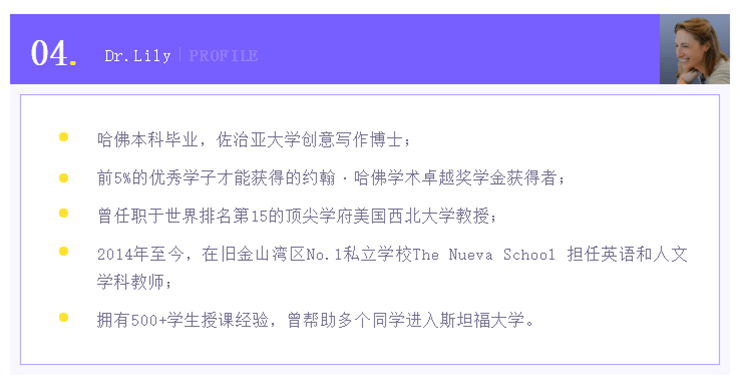
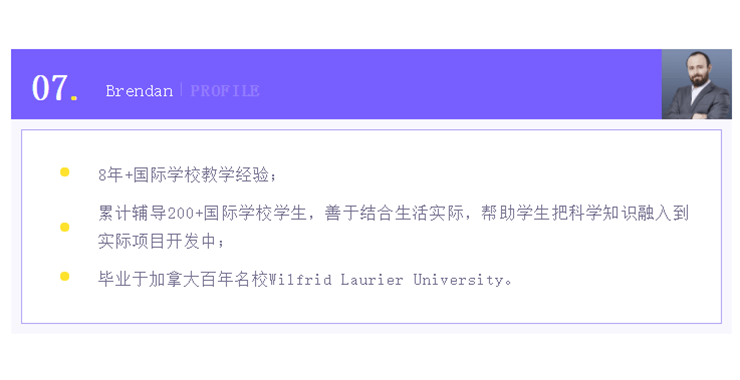
Meet some of our highly qualified and experienced teachers!

Why Should I Choose 1-on-1 Services?
Perhaps your child is preparing to study abroad or applying to a new school and he or she would like a more intensive and targeted approach in order to polish his or her skills. Alternatively, your child might not feel challenged enough with his or her current curriculum, and needs an alternative approach that is more appropriate for his or her ability level.
There are a number of reasons a parent might be searching for services such as this, and we can assure you that we will always work to understand you child’s unique situation and provide the service that is best for them.
How Does it Work?
With our hands-on approach, and orientation process, we will assess your child’s knowledge and skills based on current assessment data, writing ability, і многае іншае. Based on our findings, we will select the teacher best suited for your child’s needs. All of Reach Out’s teachers have been carefully selected, and have years of experience in teaching challenging curriculums, such as IGCSE, IB, і АП, in top schools from around the world.
Our process is goal-oriented. We find out exactly what your child needs to reach their educational goals, and then we create a unique and tailor-made learning path that will best suit your child’s particular needs.
What Else Does Reach Out Offer?
In addition to 1-on-1 services, Reach Out offers a wide variety of courses specifically designed to challenge and engage your 2nd to 8th grade child with above grade level content in order to help them prepare for the rigor of programs such as IGCSE, IB, і АП.
How Can I Learn More?
To find out more about our 1-on-1 services, please contact one of our Education Consultants today to find out more! We look forward to helping your child reach his or her educational goals for a bright future!
Хто мы
Як вы маглі заўважыць, мы раслі і маем некалькі захапляльных дапаўненняў да таго, што мы прапануем тут, у Reach Out. Бо прайшло шмат часу з таго часу, як мы прадставіліся, мы думалі падзяліцца з вамі нашай гісторыяй, каб дапамагчы вам лепш зразумець, хто мы і што робім!
Наша місія
Місія Reach Out заключаецца ў тым, каб злучыць студэнтаў з педагогамі-экспертамі, якія ствараюць і прадстаўляюць арыгінал, натхняльны, навучальныя праграмы сусветнага ўзроўню. We have embarked on this journey so that we may help students understand how to find their own unique voice and uncover the creative and valuable ideas that lie within each of them. Сваімі галасамі, у іх ёсць сіла змяніць свет, і мы хочам даць ім магчымасць зрабіць гэта.

Наша бачанне
Reach Out strives to be an internationally recognized educational institution that allows students to access top level international curriculum and educators, незалежна ад таго, дзе яны знаходзяцца ў свеце. Нашы вучні будуць праніклівымі, цікаўны, і крытычныя мысляры, якія робяць усвядомлены выбар як выдатныя вырашальнікі праблем і камунікатары. Студэнты Reach Out дасягнуць сваіх акадэмічных і асабістых мэтаў і мараў ад пачатковай школы да універсітэта, размяшчэнне іх бліскучай будучыні ў межах дасяжнасці.
Нашы асноўныя каштоўнасці
Гэта прынцыпы, якія фармуюць Reach Out:
Наша гісторыя
Reach Out быў створаны невялікай групай адданых сваёй справе маці, магчыма, як і вы самі. Іх збліжала агульнае бачанне адукацыйных патрэб сваіх дзяцей. Некаторыя шукалі адукацыйную праграму, якая магла б прапанаваць іх дзецям доступ да ідэй, выкладанне філасофіі, і метадалогія, якая адпавядала таму, што яны перажылі, жывучы за мяжой. Іншыя шукалі інтэрнацыяналізаваную навучальную праграму, да якой іх дзеці маглі б атрымаць доступ, каб узбагаціць свой адукацыйны вопыт у Кітаі. Іх аб'ядноўвала імкненне да строгай праграмы, якая таксама адкрывала дзверы для творчага і крытычнага мыслення, самарэфлексія, і асабістае самавыяўленне - прыкметы моцнай міжнароднай вучэбнай праграмы. Выдаткаваўшы шмат часу на вывучэнне розных варыянтаў, гэтыя мамы не змаглі знайсці нічога, што цалкам задавальняе патрэбы іх дзяцей.
Такім чынам, яны зрабілі тое, што зрабіла б любая добрая маці, далі шанец, і знайшлі ўласны спосаб прапанаваць сваім дзецям найлепшыя магчымасці для навучання, каб дапамагчы ім развівацца. Яны кансультаваліся з настаўнікамі-экспертамі і працавалі з іншымі бацькамі, каб высветліць, як лепш задаволіць патрэбы іншых дзяцей з падобнымі мэтамі. дзеці, мы спадзяемся, як твой.
Бацькі былі адданыя:
Мы рады сказаць, што гэтыя маці дасягнулі сваёй мэты. Сёння Reach Out можа пахваліцца поўнай лінейкай строгіх, але прывабных курсаў, на якіх студэнты вучацца глыбока, забаўляючыся і ствараючы значныя адносіны са сваімі настаўнікамі і аднагодкамі.
Усё гэта дзякуючы прыхільнасці нашых маці-заснавальнікаў да адукацыі і шчасця сваіх дзяцей.
Што робіць нас унікальнымі?
Хоць мы разумеем, што бацькі маюць шырокі выбар, калі справа даходзіць да праграм, якія ўзбагачаюць адукацыю іх дзяцей, мы лічым, што прапануем шмат унікальных якасцей, якія не лёгка знайсці ў іншых месцах.
Our team consists of highly skilled and experienced educators who have created a unique and rigorous program based on international school standards, які рыхтуе малодшых школьнікаў да строгіх навучальных праграм, такіх як IGCSE, IB, і АП.
-Нашы індывідуальныя праграмы і навучальныя планы распрацаваны, каб перасягнуць адукацыйныя патрэбы нашых студэнтаў
-Наша філасофія навучання натхняе і пашырае магчымасці студэнтаў, і метадалогія навучання, якая дазваляе студэнтам вывучаць веды шырока і глыбока, адначасова развіваючы любоў да навучання
-Our commitment to the long-term success of our students as we strive to equip them with the essential skills they will need to succeed in their future careers and the world beyond school
- Падрабязная зваротная сувязь, якую мы даем з усімі ацэнкамі студэнтаў, каб студэнты ведалі, у чым яны дасягаюць поспеху, а ў чым могуць палепшыцца, а таксама дадатковыя матэрыялы і інструкцыі, неабходныя, каб дапамагчы нашым студэнтам ліквідаваць любыя прабелы ў разуменні
-Наша адданасць развіццю крытычнага мыслення нашых студэнтаў і навыкаў рашэння праблем, што будзе мець важнае значэнне для іх будучыні, а таксама будучыню нашага глабальнага грамадства
-Мы абяцаем наняць увесь наш выкладчыцкі і непедагагічны персанал на аснове іх узаемнага захаплення адукацыяй
-Наша здольнасць даць студэнтам магчымасць выкарыстоўваць мову, ведаў, і навыкі, якія яны набываюць, каб развіваць сябе за межамі класнай пакоя і станавіцца цікаўнымі, навучэнцы на працягу ўсяго жыцця, якія ставяць перад сабой складаныя задачы і дамагаюцца іх, выкананне, і вартыя мэты.
-Нашы практычныя, індывідуальны падыход да стварэння шляху навучання для нашых студэнтаў, так што незалежна ад таго, на якім узроўні яны знаходзяцца, калі яны далучаюцца да нас, яны будуць аснашчаны інструментамі, неабходнымі для паляпшэння і хуткага росту
-Our commitment to empowering our clients with information and experiences that will help them make the absolute best choices for their child's education by offering informative articles, відэа і майстар-класы.
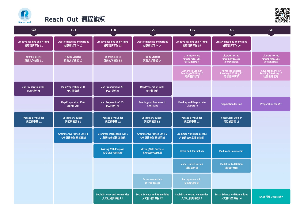
Наша вучэбная праграма
Наша навучальная праграма Blue Line, які ўключае курсы для студэнтаў у Grades 2 каб 8, быў распрацаваны педагогамі-экспертамі з вучонымі ступенямі ў сваіх прадметных галінах, якія правялі дзесяцігоддзі ў некаторых з лепшых міжнародных школ свету. Мы выкарыстоўваем адваротны дызайн навучальных праграм, прабіваючыся з першага курса такіх праграм, як шырока прызнаная і паважаная праграма IGCSE.
Паколькі нашы выкладчыкі выдаткавалі гады на навучанне на курсах да IGCSE, IGCSE, Навучальны план узроўняў IB і AP або A, яны разумеюць, што трэба студэнтам для дасягнення поспеху ў гэтых праграмах. Такім чынам, кожны аспект нашай вучэбнай праграмы быў створаны, каб гарантаваць, што ўсе нашы студэнты паступяць у свой першы дзень у класе 9 пачуццё ўпэўненасці, абсталяваны, і гатовы задаволіць патрабаванні гэтых строгіх курсаў.
Мы прапануем шырокі спектр курсаў па англійскай мове, Матэматыка, Гісторыя і геаграфія. Больш падрабязную інфармацыю аб нашых поўных курсах глядзіце ніжэй.
Дадатковыя паслугі
Мы таксама рады паведаміць аб стварэнні нашай Silver Line, які прапануе індывідуальныя адукацыйныя паслугі з індывідуальным падыходам да задавальнення патрэб нашых студэнтаў. Мы пачынаем з глыбокай ацэнкі адукацыйных мэтаў і патрэб кожнага студэнта, а затым стварыць і ўкараніць схему працы, з дапамогай якой нашы эксперты-педагогі будуць накіроўваць вашага дзіцяці праз акадэмічныя праблемы сярэдняй школы, каб падрыхтаваць яго да паступлення ва ўніверсітэт сваёй мары.
Мы таксама прапануем індывідуальныя паслугі на ўсіх узроўнях для бацькоў, якія хочуць прапанаваць сваім дзецям больш індывідуальны догляд і навучанне. Нашы эксперты-кансультанты па адукацыі падбяруць для вашага дзіцяці лепшага педагога для яго ці яе канкрэтных патрэб і мэтаў.
Далучайцеся да нас!
Мы з нецярпеннем чакаем сустрэчы з вашай сям'ёй і абмеркавання таго, як вы можаце стаць часткай нашай сям'і Reach Out; той, які вучыцца разам, клапоціцца адзін пра аднаго, разам пераадольваюць цяжкасці, і адзначаюць поспехі адзін з адным. Калі ласка, звяжыцеся з намі сёння, каб даведацца больш.
Мы спадзяемся пачуць ад вас у бліжэйшы час!
Being a parent is hard. In fact, with the changes in our world today, it might just be one of the challenging moments we have had to face in decades. Change leads to uncertainty, and uncertainty can lead to stress. Stress certainly affects all areas of our lives, sometimes it will impact our relationship with our loved ones the most; especially our children.
Our children can be complicated (let’s face it, so can we!), and it is a daunting task to ensure that every move is the “right” one. That all of our conversations, demands, requests, plans, praises and criticisms mean something. Every moment we spend talking to our kids, we hold the hope that these words will be enough to fill our children with the hope of a great future at a time where the future is so uncertain. Times change, and this too shall pass, but one thing we can guarantee is that we will never have a second chance at spending a childhood with our children.
Як бацькі, we often ask ourselves if we are in fact doing the right thing, wondering how we can get through to our kids, trying to understand our children better, and sometimes feeling like a guilty failure because we tell ourselves we are doing it wrong. Oftentimes, that is not the case, but there is no instruction manual on how to raise a child that will work for everyone in all situations. Sure, there is a lot of advice, an overwhelming amount of it, but again, most advice is just that; guidance and recommendations by people who don’t know you or your child. Some of it is helpful, and some of it…not so much.
One thing that we cannot deny though is the importance of a healthy relationship between parent and child.
Research shows that:
It is essential to make the time to nurture a relationship with your child, and perhaps even more imperative, making sure the interactions we have with our children during that time are positive. This is something that many parents find challenging, which is why we created a parent book club for the book Як размаўляць, каб дзеці слухалі, і слухаць, каб дзеці гаварылі by Adele Faber and Elaine Mazlish. Together we learned ways to positively communicate with our children in order to strengthen our bonds. We spent time discussing ideas from the book, as well as had a virtual meet up to role-play some of the strategies from the book. On top of that, we invited Middle School Guidance Counselor, Рэгіна Венер, to provide parents with a workshop in understanding our child’s cognitive and emotional development.
Here are some highlights we would like to share with you!
First, from Як размаўляць, каб дзеці слухалі, і слухаць, каб дзеці гаварылі, here are two of our favorite strategies:
Children have difficulty regulating their emotions, as the brain’s emotional regulation center is one of the last to develop. This means that they need our help in the form of compassion and modeling. This can be so challenging, especially when we may have difficulty managing our own emotions at times! We have an easy strategy for you that will only require two things:
When your child comes home upset about something that happened at school, instead of lecturing and offering our sage advice, we can simply listen to their concerns and repeat the ideas back to them. For example, if your child comes home upset and says something like, “Ugh, today Elizabeth and Sarah were so mean to me! They completely ignored me and I hate both of them now!” Instead of saying, “Elizabeth and Sarah are your best friends. It’s not a big deal and I am sure you will be fine tomorrow,” which could invalidate your child’s feelings, you can say, “Oh, I see. Elizabeth and Sarah made you feel a bit left out. That probably made you feel a bit sad and mad.” At this point your child might keep talking and open up to you, which is great! It means they trust you and you are making them feel better. Continue to listen, nod, say, “Mmmhmm,” and repeat what they say. Having you simply listen will likely make your child feel 100% better and ready to face their next challenge!

2. I wish!
Our children often express their desires in the form of wishing they had things they don’t have or wishing things were different than the way they are. For example, children may say, “I wish I didn’t have to do all that homework.” We may reply, “Well, you do and that’s that!” or “It’s what you have to do. It’s your responsibility so you need to do it now!»
This may escalate into a battle of wills as parents feel frustrated that they keep hearing the same complaint and repeat the same reasoning. The children feel frustrated because their opinions are being invalidated and they feel misunderstood. добра, don’t worry, we are here to help! We have a little trick that will help you turn the conversation around, and that is to agree with your child. It may sound counterintuitive, but we have firsthand experience with this trick and it works wonders!
For example, if your child says, “I wish we could go to the park today like I wanted!»
Instead of saying, “I can’t, I am too busy,” or “Yes, but we can’t, it’s raining,” we can say, “I wish we could too! We could go to the park and have a picnic! We could fly a kite and blow bubbles! Why don’t we have a picnic in the living room and after that we can blow bubbles in the bathroom!»
The first part gets the kids excited and their imagination going, taking them to a happy place. The next part makes them feel heard and connected to you.
зараз, some highlights from Ms. Wehner’s workshop:
*Please help me choose these! :)*
If you would like to join one of our workshops or book clubs in the future, make sure to follow us and stay tuned! We have great things coming up this fall!
Many parents ask us what the fastest way their child can improve their writing. While we firmly believe there are no shortcuts to becoming a truly effective and skilled writer, there are some things students can incorporate into their writing to help take it to the next level more efficiently. Like with anything trying to be mastered, the key to success lies in hard work and repetition. Practicing these skills regularly will help your child reach their educational goals.
This article will be the first in a series of articles that will focus on skills suited for different types of writing. This week, we will focus on descriptive writing tips.
Descriptive Writing Tips:
Descriptive writing is a true art form, as its purpose should be to create an image in the minds of the readers. One cannot tell a story on action and dialogue alone, and one cannot convey deep meaning and emotion in a poem without painting a picture with his or her words.
One powerful way to excel in description is to add adjectives and adverbs wherever possible. For example, if your child is writing a story he or she might write something like:
“Harry went outside and started looking for his friends.”
While this sentence conveys a basic meaning, it’s effect on the reader is also basic. By adding descriptive language in the form of adjectives and adverbs, we can quickly and effectively add imagery to the sentence:
“Harry zipped out the front door, slamming it shut behind him. His heart raced as he ran around the neighborhood eagerly looking for his friends.”
In the revised sentence, we see descriptions that tell us not only the action that is taking place, but also helping us feel the emotion of the character, an important aspect of storytelling.

Another great way to make a story or poem more effective is by adding figurative language, such as similes. Similes are comparisons that use like or as that can be used to help the reader imagine what is happening more clearly.
For example, your child might write something like:
I was so happy!
It was so cute!
He was so scared!
We can add similes to help create an even better result:
I was as happy as a a kitten in a yarn shop.
It was a cute as a baby panda playing in the snow.
He was as scared as a rabbit that just heard a wolf howl.

Our final tip for descriptive writing is to choose vocabulary that is so precise that it communicates exactly what the writer wants the reader to feel. Often, students will write descriptions that are a bit vague, with sentences like:
He was very tired.
The movie was very boring.
They were very cold.
The room very hot.
Again, these sentences convey a simple meaning, but in descriptive writing, that is simply not enough. Effective description uses vocabulary that has an impact, and we can achieve that by choosing only the best words to convey the most exact meaning.
See how we can take the sentences above from ordinary to extraordinary by replacing part of the sentence with powerful vocabulary:
He was exhausted.
The movie was unimaginative.
They were chilled to the bone.
The room was roasting.
The good news is that your child doesn't need to rely on his or her current vocabulary knowledge in order to succeed in creating sentences like those above. The thesaurus has all of the words they need to create memorable descriptions.
We hope these tips have been helpful! If you would like for your child to learn how to put these skills into practice with one of our passionate educators, stay tuned for coming announcements on our new summer and fall courses!
Next week, we’ll have a look at persuasive writing tips!
Tell us a bit about yourself.
I grew up in five different countries (Sweden, England, Germany, South Africa, and Canada). Integration into a diverse spectrum of cultures growing up has made me see the world with an open mind. I currently reside in Canada and work as both a university lecturer and a Math teacher at Reach Out. Outside of work I really enjoy sports such as badminton and chess, which I played at a competitive level for many years.

What is your educational background and qualifications?
I received a Bachelor of Science Degree from the University of British Columbia (UBC) and an obtained my MSc at the same university. My graduate work involved experimental geoscience where I designed an apparatus to investigate how diamonds reach the surface of the Earth through high velocity magmas. I published articles in two high impact journals and presented the work across Canada and Europe.
During my graduate studies I had the privilege of lecturing a few classes which transitioned into a lectureship position. Teaching at the university level involves lecturing a class of over 200 студэнтаў, which is very different to the work I do at Reach Out, but has helped me develop a dynamic teaching style.
Additionally, I have been teaching Math and Science both privately and through educational organizations for over 6 гадоў.
Why did you join Reach Out?
I joined Reach Out because the prospect of being able to deliver high quality education from around the globe without border restrictions resonates with me.
I feel that the reason I am committed to staying at Reach Out is more important. The personalized classes being delivered has allowed me to connect with the students, making their progression much more meaningful to me. Some students have been together with me through multiple grade levels and I feel immensely proud to have played a role in their education.
What is your educational philosophy?
Having a background in experimental science has allowed me to see value in making breakthroughs through experimentation. By allowing students to experiment with different methodologies while offering guidance is an extremely effective way of teaching students to not be afraid of failure. Richard Fuller correctly said, “There is no such thing as a failed experiment, only experiments with unexpected outcomes.” Students often start my classes afraid to answer questions, discuss with their classmates, or write on the board since they don’t know the answers. Since I am always more focused on solutions rather than answers, students’ are rewarded for trying new techniques, discussing failed methods, and asking questions about their classmates’ work. I found this to produce a phenomenal learning environment and takes a lot of pressure off the students.

What is your favorite thing about teaching Math?
My favorite thing about teaching Math is the exciting challenges it provides. After teaching Math for many years, I have come to realize that students see the world from a unique perspective, which more often than not, is very different from my own. This diversity produces a wide spectrum of learning styles and requires me to stay very flexible with the methodologies I use in my teaching.
Math is a complex subject which has provided us with a universal language to better understand the universe that surrounds us. Having a good problem solving ability is a byproduct of learning Math and crucial for success in the modern world. For these reasons I have the responsibility to transform a traditionally dry and boring subject into something exciting by creating compelling lessons and using creativity to inspire my students. This will always be something I love about my job.
Who is your favorite mathematician and why?
This is a tough question, and it’s hard to pinpoint one Mathematician since I utilize the works of so many Mathematicians in just one lesson. If I had to pick it would be either Johannes Kepler or Nicolaus Copernicus since I also love astronomy. Their Math not only challenged everything that was believed about our solar system at the time, but also formed the foundations for understanding planetary motion. Space travel has relied heavily on these concepts.
If you could only give parents one piece of advice when it comes to helping their child improve in Math, what would it be?
One thing I have worked on a lot with my students, is getting them to explain their solutions to me regardless of how easy it may seem. Being able to arrive at the correct answer in certain school curriculums may not require a complete understanding, but being able to explain a solution well does require a good understanding. Make sure that your child is always showing very clear steps in their work and that they can explain their steps to you. This certifies understanding and shows they are prepared for questions which test the same concept but may be worded differently.
What is one fun fact about yourself?
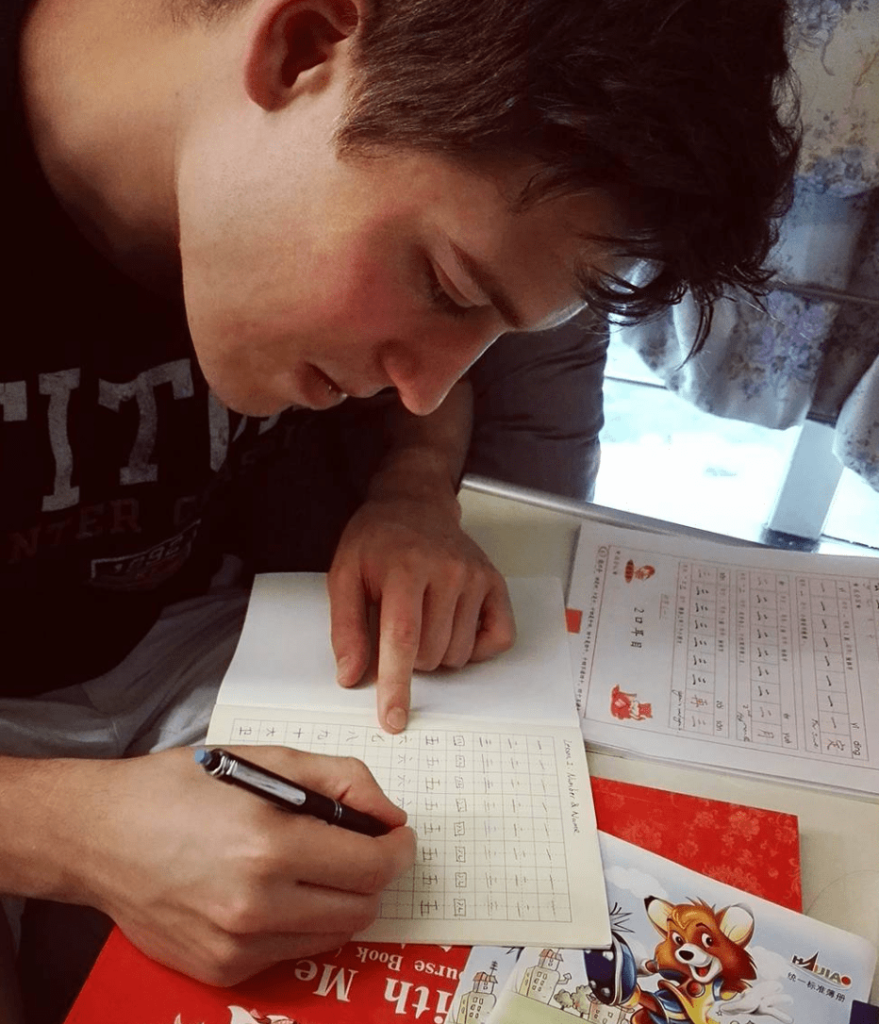
I really like learning languages! After growing up in many different countries I can speak English, Swedish, and German fluently. For the past two years I have been working to add Chinese to my collection and have enjoyed the unique challenges that learning this complex language has provided me with.
The Secret Garden is a piece of classic literature that has been part of an untold number of childhoods (if you missed our article on why children should read classic novels, see it linked below!). It is a powerful tale of friendship and discovering oneself that resonates with our souls.
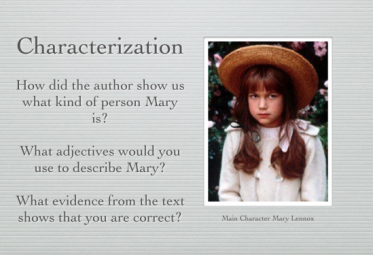
The Secret Garden is about a young girl named Mary Lennox who loses her family and everything familiar with her due to a cholera outbreak in India, where her father was working as a British Army Captain. As a child, Mary was quite neglected, but indulged by family’s servants, so she was a spoiled child with a terrible disposition. She had very few traits that would help her cope with a new life in England, where she was sent to live with a grouchy distant relative, сп. Craven.
сп. Craven had very strict rules for Mary to follow at her new home at Misselthwaite Manor in Yorkshire, which included her being forbidden to enter various rooms inside the giant mansion, as well as forbidden to enter one of the gardens on the sprawling property, which belonged to his beloved late wife. As Mary begins to explore her new home, she begins to find a sense of happiness and regains her health after being sickly for much of her childhood. After a robin helps her find the key to the secret garden, she finds a sense of purpose in restoring the garden, much as she restores her inner self. Through the thorns and dried leaves of winter, she finds much more lies within.
Aided by new friend Dickon, Mary develops her first friendships, and uses her newfound strength and kindness to help her bedridden cousin Colin, whom she finds tucked away in the manor. Friendship strengthens both Mary and Colin, and in the end, everyone witnesses a miracle only made possible by these close bonds and belief in oneself, two very important themes in the novel.
Young people will love reading this fantastic story of friendship, overcoming obstacles, and experiencing the healing power of nature. The characters and the lessons they teach us will surely touch your child and help them experience the power of a great story.
If you would like an opportunity for your child to experience this story with others, we are happy to let you know that we will be reading The Secret Garden as the first novel in our Young Classics Level 2 Course this summer.
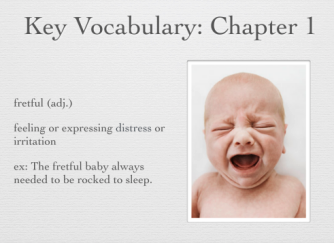
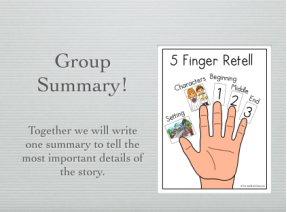
In the course, we not only read the novel, but we also learn and apply new vocabulary from the book, discuss important literary techniques used by the writer, and practice writing summaries, a key skill that many students find challenging
If you are interesting in learning more about Young Classics, or and of our other excellent and engaging courses, звяжыцеся з адным з нашых кансультантаў па адукацыі сёння! We hope to work with your child very soon!
Literature study is an important aspect of any excellent academic program, and that is because it helps to teach students a wide range of knowledge and skills that are essential for success in many areas of life. While studying literature, students learn about important events and people throughout history, they consider cultural perspective and increase their own understanding of acceptance of different ideas and beliefs, and they learn how to analyse the words of others in order to form a deep understanding of new ideas and ways of communicating. In short, it exposes students to a toolbox of ideas, techniques, strategies, theories, and more that they will carry with them throughout their life, shaping the way they approach the world.
Why do we offer this course?
Reach Out students typically pursue high school programs such as IGCSE, which includes challenging courses such as English Language and Literature and English as a First Language. Later, most of those students will take on the challenge of IB and AP level programs, in which they must take on the task of reading a variety of literature. Our aim is to expose students in upper primary and middle school to a wide range of advanced literature so that by the time they reach high school they possess the knowledge and skills to hit the ground running, and therefore achieve to a higher level.
This course is designed for Grade 7-9 студэнтаў.
The Objectives of our Advanced Literature Course are to:
✪ Enhance students’ ability to understand and discern literary techniques used English and American literature, and the ability to communicate the effects of those techniques;
✪Improve children's literary comprehension skills and increase their understanding of British and American culture;
✪ Under the guidance of our expert educators, learn the power of language and storytelling in a challenging yet engaging way.
Meet Our Teachers
*Insert teacher bios here for Barry, Anthony, and John*
Our Book Selections:
Cry the Beloved Country by Alan Paton

Set in South Africa in the 1940s, award-winning Cry the Beloved Country tells the story of a Zulu Pastor, Steven Kumalo, who travels from his village to the city of Johannesburg. Along his arduous and heart-wrenching journey, he discovers that his sister and son have found themselves in terrible situations that he must now face with them. The characters’ vastly different lives become unexpectedly woven together through tragedy during a dark time in South Africa’s history. Аднак, through tragedy and challenges, the true nature of the human spirit can be found and uplift those who need it most.
Dracula by Bram Stoker

The legend of Dracula has loomed large in the minds of readers and movie-goers for generations. Bram Stoker based the infamous character of Dracula on the legend of the real life ruler of Wallachia, Vlad the Impaler. Stoker was able to take this dark corner of history and turn it into a legendary novel told through journal entries, letters and telegrams. As with any classic, Dracula has stood the test of time because it speaks to something very deep and meaningful within the human psyche.
Of Mice and Men by John Steinbeck

The Great Depression was a defining moment in American history that tested its strength as a nation, and placed the population in a precarious balance between life and death. In what is considered one of the greatest American classics, readers are introduced to two displaced migrant workers, George and Lennie. George is an intelligent young man, while Lennie is mentally disabled. George takes Lennie under his wing as they seek employment where few opportunities exist, trying to survive, yet still dreaming of the day they will have their own land and build a life. Their hopes are dashed when a devastating incident occurs that alters their lives forever.
What Students Will Gain
Develop an early sense of literary appreciation,
See the world from a more mature perspective
British and American classics contain thought-provoking moral and social issues. Reading the most influential classic literature thoroughly helps students become better readers, and begin the process of pursuing self-realization.
Improve understanding of culture and history
Learning allusions from classic British and American literature can help us bridge cultural differences. "The classics have opened the door to different worlds, different cultures, and different historical perspectives. Literature crosses race, culture, religion, and geography."
Self-reflection and personal growth
Many classic literature allude to our lives from the side: books that reflect similarities to our own lives are called "mirrors"; and those that give us a glimpse of different lives are called "windows." Whether it is a "mirror" or a "window", it further enriches the students' life experience and increases the courage and strength to face life.
Далучайцеся да нас!
Contact us to discover more about our course. We sincerely hope to meet your child soon, and develop a love of reading classic literature together.
It’s back to school time and we know parents are getting ready for a new year with new beginnings. The start of a new year is usually met with a mix of excitement and a bit of anxiety, as students and parents look forward to new skills and experiences, but also might feel nervous about new routines and expectations.
Не хвалюйцеся, Reach Out it here to help! This year, we have 5 top tips to a fantastic start to the school year.
Understanding how your child’s school approaches education, what curriculum they use, what systems, and standards are used can be overwhelming for non-educators. Spending a bit of time each day reading your school’s website content, handbooks, and other resources can help you feel more confident in understanding what your child is learning at school and how they are learning. It’s also important to attend your child’s back-to-school night and informational sessions to get a better understanding of your child’s program as a whole. It also provides a great opportunity for you to establish a relationship with your child’s teacher. At any time if you still have questions, you can always e-mail your child’s teacher. They are there for you and your child, as they know that a great relationship with parents is a fantastic way to ensure academic, social, and emotional success for all students.
2. Make Sure to Catch Enough Zzzzs Before the ABCs
Sleep is so important for a child’s growth and development, and a lack of it can negatively impact a child’s academic achievement. In fact, research shows that sleep depravation in children can lead to higher rates of anxiety and depression. When we sleep, our brain processes the information from he day, finds the best system to file it away in out memories, and re-charges our systems for a new day. For various reasons, parents often find sticking to an early bedtime difficult, but with a clear routine, and time for adjustment, it can be easy! дзеці 3-6 years old should be getting 10-12 hours of sleep per day, 7-12 year olds should get 10-11 hours per day, і 12-18 year olds should get 8-9 hours per day. Creating a schedule where children get to bed earlier will make mornings easier as well, hopefully with less stress for both parents and children as they will be well rested and ready to start their day!
3. Ask the Right Questions at the Right Time
Sometimes parents are anxious to know how their child’s day was as soon as they get home from school, especially during the first few weeks. Those weeks are especially exhausting and full of ups and downs as your child learns to navigate new material, new friends, new teachers, and new expectations. Giving them time to come home and decompress is extremely important for their emotional and mental well-being. Once they have had some “me” time, parents can ask specific questions based on what they know they are working on, if they happen to know. They can go through their child’s homework diary with them and help them make a plan on how to tackle each task, as well as share in their enthusiasm for specific subjects, books, or information they also enjoy. Avoid asking, “How was school? What did you learn?” as kids respond much better to more specific questions, such as, “What did you do with your friends at lunch? What was the best part of your day? What was the weirdest or most wonderful thing that happened at school today?” Most importantly, parents should be fully present and listen intently when students answer, so they really feel valued and hear when they share.
4. Let Them Learn From Failure
This one can be extremely hard for parents to allow. We want our children to do well and reach their full potential, which means we might go over each assignment with a fine-toothed comb, correcting every mis-calculation or grammar mistake. Although parents have good intentions when we do this, we are taking away important learning opportunities from children when we do so. Back when we were students, many of our parents were often too busy or didn’t have the knowledge or capacity to help us with our school work, but we found a way to push through and try our best. If children are never given opportunities to fail when they are young, they might resist taking on challenges later in life for fear of failing at them. Аднак, when we let them fail gently, such as on an assignment or at a little league soccer game, we are teaching them resilience. It’s not the end of the world, and they learn a valuable lesson; that we can try and not succeed, dust ourselves off, and try again next time.
5. Nurture Their Passions
New school years are an exciting time for many reasons, one of them being that they provide children a chance to discover new passions. If they are lucky, they will stumble upon something they truly love, and that they can become fascinated with enough to spend hours on end discovering. Helping a child find his or her passion is not always easy and takes time. Sometimes parents worry if their child focuses too much on a couple of things, and feel they need to expose them to as much as possible to help shape them into well-rounded individuals. Аднак, if we look at the people who have shaped our world, it was because they had a laser focus on what they were passionate about. It was all they ever did or do. As humans, we naturally gravitate towards what we love most, and as long as it provides some sort of value on top of fulfillment, we should continue pursuing it. Такім чынам, don’t worry if your child protests going to one activity while running out the door to attend another. Maybe the one they love is the most valuable to their growth and development, and the one they don’t like isn’t that necessary after all.
We hope these tips have helped, and we wish you and your child the best in the coming school year! We are excited for the new school year and all of the challenges and hope it will bring.
Reach Out will be with you every step of the way, so be on the lookout for more information and more articles we hope you will love!