Di Jangkau, kami percaya sangat penting untuk merayakan keberhasilan siswa. Kami dengan senang hati mengumumkan Siswa Bintang lainnya - Ema!
Emma mewakili segala sesuatu yang dapat dicapai siswa dengan kerja keras dan komitmen terhadap keunggulan. Guru Emma mengenalinya sebagai siswa yang memiliki sikap belajar yang baik, sangat reseptif terhadap instruksi, dan memiliki keluarga yang sangat mendukung yang sering berkomunikasi dengan gurunya. Di kelas, Emma adalah pendengar yang cermat dan penuh perhatian serta cukup percaya diri untuk menyampaikan idenya, tapi cukup sabar untuk memberikan giliran kepada semua orang. Dia tidak keberatan mengambil risiko, dan mampu memasukkan kepribadiannya ke dalam karyanya.
Emma saat ini terdaftar di Tingkat Membaca dan Menulis Kreatif kami 4 Kursus, dan dia telah menunjukkan bakat nyata dalam mampu menciptakan citra yang kuat dalam tulisannya. Di awal semester, dia menyelesaikan ulasan tentang cabang Shanghai Disneyland Blue Frog.
Emma menunjukkan kemampuannya dalam mengkritik aspek tertentu dari suatu tempat, dan mengembangkan ide-idenya menggunakan detail yang sesuai.
“Pemandangan dan lokasinya sangat memuaskan. Di malam hari kita bisa duduk di luar dan menikmati pemandangan Disney Castle dan kembang api.”

Seiring berjalannya semester, Emma menunjukkan perkembangan dalam keterampilan menulisnya, dan mulai menerapkan teknik sastra yang lebih maju. Dalam tugas mendeskripsikan bentang alam, Emma mampu menciptakan citra yang kuat menggunakan kosakata dan bahasa kiasan yang tepat.
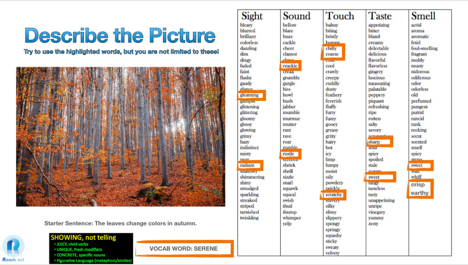
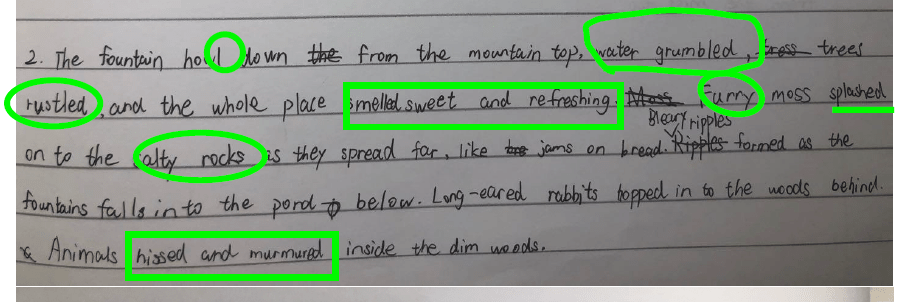
“Lumut berbulu terciprat ke bebatuan asin saat menyebar jauh, seperti selai pada roti. Riak suram terbentuk saat air mancur jatuh ke kolam di bawahnya.”
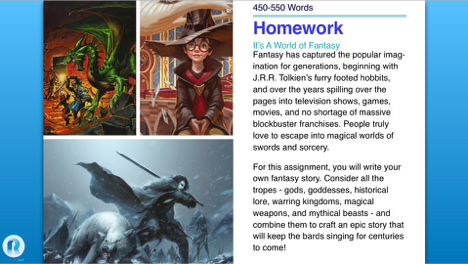
Emma terus menerapkan pelajaran yang dia pelajari sepanjang kursus, dan kemampuannya sebagai penulis menjadi lebih kuat. Dalam tugas baru-baru ini tentang menulis Narasi Fantasi, Emma membangun latar dan karakter ceritanya dengan sengaja dan efektif.
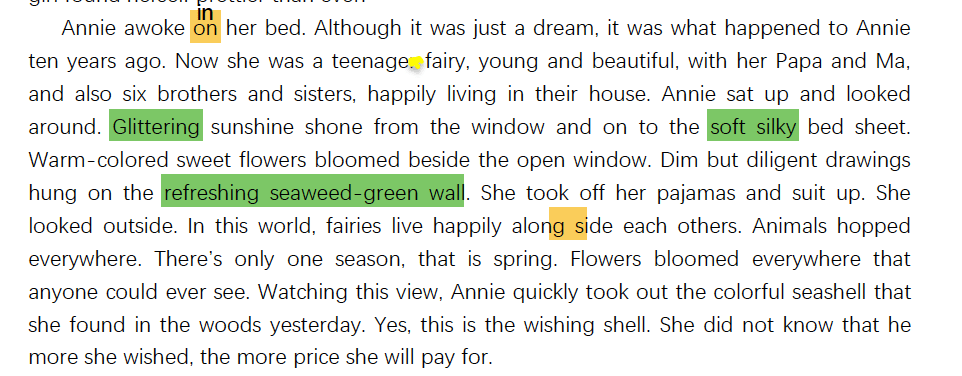
“Sinar matahari yang berkilauan menyinari jendela dan menyinari lembut, sprei halus. Bunga manis berwarna hangat bermekaran di samping jendela yang terbuka. Gambar yang redup namun cermat digantung di dinding hijau rumput laut yang menyegarkan.”
Seperti yang Anda lihat, Emma menampilkan ciri-ciri seorang penulis muda yang menjanjikan. Tekadnya untuk berkembang, dan penerapan pelajaran yang diajarkan secara cermat telah membantu meningkatkan tulisannya ke tingkat yang lebih tinggi.
Terima kasih Emma, karena telah menjadi BINTANG! Kami berharap dapat melihat pertumbuhan Anda dalam jangka panjang. Kami tahu ini hanyalah awal dari perjalanan cemerlang.
Sebagai pendidik, kita sudah sering ditanyai pertanyaan itu, “Bagaimana caranya agar anak saya berhenti membaca komik?“Orang tua khawatir komik tidak memberikan nilai edukasi, secara akademis tidak cukup ketat, atau yang terburuk dari semuanya, membuang-buang waktu anak mereka. Untuk ini, jawaban kami biasanya mengejutkan mereka, dan jawabannya adalah, “Biarkan mereka membaca komik!”
Dapat dimengerti jika orang tua akan sedikit khawatir karena ada anggapan bahwa komik hanyalah untuk kesenangan membaca, Namun, komik memiliki banyak manfaat selain membantu kita menghabiskan waktu.
Komik dan novel grafis bukanlah bentuk penulisan baru. Tentu saja, mereka telah dinikmati oleh banyak orang selama beberapa generasi. Selama bertahun-tahun, genre ini telah berubah menjadi genre yang memiliki kedalaman dan makna yang cukup besar, Oleh karena itu kami menghimbau para orang tua untuk tidak hanya mengizinkan anaknya membaca komik saja, tetapi juga untuk mendukung mereka dalam melakukan hal tersebut.
Inilah alasan utama kami mengapa komik harus dibaca (terutama di musim panas!):
Untuk siswa yang bukan penutur asli bahasa Inggris, komik memberikan cara terbaik bagi mereka untuk mulai menikmati sastra Inggris. Bagi banyak anak, tugas beralih dari buku teks bahasa Inggris ke novel bisa jadi sangat menakutkan, namun komik dapat memberikan jembatan yang diperlukan bagi mereka untuk membangun kepercayaan diri serta kelancaran membaca. Isyarat visual dalam gambar memungkinkan siswa untuk menciptakan pemahaman yang lebih mendalam tentang alur cerita dan karakter serta kosa kata baru. Selain itu, itu memperkenalkan mereka pada perangkat sastra yang efektif, seperti onomatopoeia (pikir POW! MEMUKUL! ZOOM!) dan idiom (ilustrasi yang menunjukkan arti dari sebuah idiom seperti, “Kucing menangkap lidahmu?” jauh lebih masuk akal daripada memanaskan idiom itu sendiri!).

2.Meningkatkan Inferensi
Inferensi adalah keterampilan membaca utama yang sulit dikuasai banyak siswa dalam penilaian membaca standar. Inferensi terjadi ketika kita menarik kesimpulan berdasarkan apa yang kita baca. Beberapa contoh pertanyaan yang akan ditemui siswa selama tugas atau penilaian pemahaman membaca adalah seperti, “Bagaimana perasaan karakter itu ketika?”, “Apa yang dapat kamu simpulkan tentang…” dan “Apa pelajaran dari cerita tersebut?Komik mengharuskan siswa “membaca yang tersirat” untuk menyimpulkan informasi yang biasanya diceritakan oleh narator dalam sebuah novel, sehingga mereka dapat memperoleh banyak pengalaman berharga dalam memperkuat keterampilan tersebut dengan membaca komik.
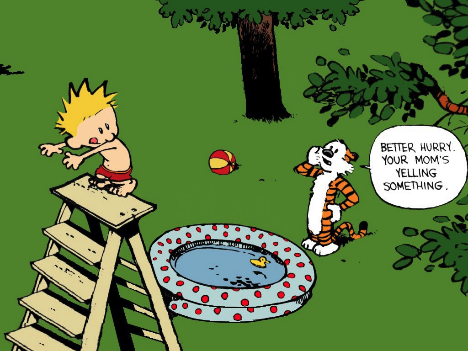
3.Kekuatan Kata!
Seringkali dalam komik dan novel grafis, penulis memasukkan kosakata yang cukup maju, baik sebagai bagian dari alur cerita maupun dalam nama karakter. Di dalam 2016 di Comic-Con yang terkenal di dunia di San Diego, Kalifornia, seorang panelis pendidik membahas kekuatan komik dalam membangun kosakata siswa. James Bucky Carter, kata penulis Membangun Koneksi Literasi dengan Novel Bergambar, “Kamu punya Raksasa, dan dia sebesar ini, pria logam raksasa. Anda benar-benar memahami arti kata raksasa dan itu adalah kata 10 sen yang bagus. Kekuatan Banshee menjerit. Anda memiliki karakter-karakter yang mewujudkan kata-kata kosa kata tersebut. Itu adalah cara yang menyenangkan untuk mempelajari kata-kata baru, selain petunjuk kontekstual.”
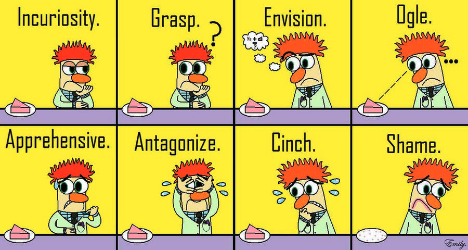
Setelah membaca ini, Anda mungkin ingin membiarkan anak Anda langsung membaca komik atau novel grafis! Itu adalah musik di telinga kita. Jika Anda tidak yakin harus mulai dari mana, kami memiliki beberapa favorit siswa yang mungkin ingin dicoba oleh anak Anda!
Manusia Anjing oleh Dave Pilkey

Miles Morales Spider-Man oleh Jason Reynolds

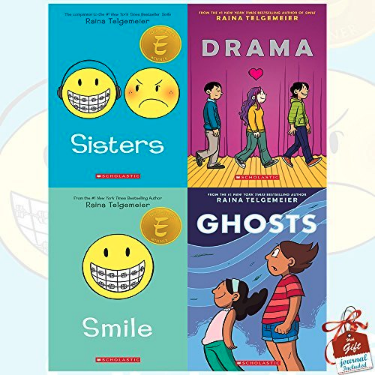
Tersenyum, saudara perempuan, Hantu, Drama dan Cerita Lainnya oleh Raina Telgemeier
Tulang oleh Jeff Smith

Mencari lebih banyak kesempatan membaca musim panas untuk anak Anda? Hubungi salah satu Konsultan Pendidikan kami untuk informasi lebih lanjut tentang kursus membaca musim panas kami. Kami menantikan untuk membaca bersama anak Anda!
Musim ujian telah tiba, dan ini bisa menjadi saat yang sangat menegangkan bagi siswa dan orang tua. Di Reach Out kami ingin melakukan yang terbaik untuk membantu meringankan kecemasan menghadapi ujian dengan menawarkan beberapa tips belajar unik yang mungkin belum pernah Anda coba.
Kebijaksanaan konvensional dalam belajar sering kali diikuti oleh banyak orang tua dan guru yang bermaksud baik, Namun, jika kita melihat beberapa pendekatan berbasis penelitian yang menarik, kita dapat melihat bahwa ada berbagai cara efektif untuk belajar! Mencoba hal baru selalu menyenangkan, terutama untuk anak-anak. Mereka dapat merasakan cara-cara baru dalam melakukan sesuatu ketika mereka masih muda, dan ketika mereka sudah sedikit lebih tua, mereka dapat memilih cara yang paling sesuai dengan kebutuhan dan gaya pribadi mereka.
Sekarang, mari kita lihat tiga cara unik untuk belajar.

Keberagaman adalah Bumbu Kehidupan-Bahkan Saat Belajar
Bagi banyak orang, bertahun-tahun kami telah diberitahu bahwa untuk belajar dengan baik, kita harus belajar di tempat yang sama setiap hari; tempat yang sepi, menyala dengan baik, dan memiliki semua materi kami. Meskipun hal ini mungkin benar untuk beberapa waktu yang kita pelajari, penelitian menunjukkan kepada kita bahwa otak kita sebenarnya bekerja lebih baik ketika kita memvariasikan lokasi tempat kita belajar. Cukup mengejutkan, Kanan?
Dalam sebuah penelitian yang dilakukan sejak awal 1978, mahasiswa diberikan 40 kata-kata kosakata untuk dipelajari. Satu kelompok diminta mempelajari daftar tersebut dua kali di lokasi yang sama. Kelompok lainnya disuruh mempelajari daftar tersebut di dua lokasi berbeda. Apa yang mereka temukan adalah, kelompok yang memvariasikan lokasi belajarnya ternyata memiliki kinerja yang lebih baik dalam mengingat kata-katanya nanti. Sekarang mengapa demikian? Dengan baik, otak kita sering kali menghubungkan informasi berdasarkan lingkungan kita, jadi semakin kita memvariasikan lingkungan kita, semakin kita memberikan otak kita kesempatan untuk menyimpan informasi karena informasi tersebut akan melekat pada lebih banyak hal. Ini mungkin juga alasan mengapa salah satu teknik visualisasi, di mana seseorang memvisualisasikan hal-hal yang ingin mereka ingat ke tempat-tempat tertentu di lingkungan yang mereka kenal, juga bisa sangat efektif. Untuk siswa, hanya dengan mengganti lingkungan saja sudah cukup!
Selamat bersenang-senang!
Beberapa orang tua mungkin salah mengira jika anaknya tertawa atau bersemangat saat belajar atau belajar, mereka mungkin membuang-buang waktu. Namun, hal ini belum tentu terjadi.
Sebagai orang tua, di tempat kerja atau kantor Anda, Anda mungkin mengadakan lokakarya khusus dari waktu ke waktu. Lokakarya biasanya digunakan sebagai alat untuk membantu Anda mempelajari strategi baru, ide, atau informasi yang akan membantu Anda belajar lebih banyak di tempat kerja. Sesi-sesi ini sering kali dijalankan oleh orang-orang yang berspesialisasi dalam menciptakan lokakarya yang memotivasi dan menginspirasi yang menyemangati dan memberi energi pada karyawan. Hari-harinya bisa panjang dan intens, tetapi jika dilakukan dengan benar, karyawan dapat pergi dengan percaya diri dengan pengetahuan dan keterampilan baru mereka.
Hal yang sama juga berlaku bagi kaum muda. Memperkenalkan permainan yang menyenangkan sebagai cara belajar menghadapi ujian tidak hanya membuat anak Anda tersenyum, namun penelitian menunjukkan bahwa bersenang-senang sambil belajar mengaktifkan sumber daya kognitif tertentu, mengasosiasikan penghargaan dan kesenangan dengan pembelajaran, memperkuat dan memperluas jaringan memori, dan mengaktifkan pemikiran abstrak dan perhatian terfokus.

Teknik Pomodoro
Tetap fokus, mengerjakan tugas dan termotivasi untuk menyelesaikan aktivitas tertentu bisa jadi sulit baik bagi orang dewasa maupun anak-anak. Pernahkah Anda merasa seperti menatap layar komputer selama berjam-jam, namun pencapaiannya sangat sedikit? Atau mungkin Anda memiliki tenggat waktu dalam beberapa hari, tetapi hanya beringsut menuju garis finis? Tidak mengherankan, karena penelitian menunjukkan bahwa pikiran kita cenderung mengembara 20% waktu itu, mungkin bahkan lebih untuk orang-orang muda.
Salah satu teknik menarik diciptakan oleh mahasiswa Francesco Cirillo sebagai cara untuk membantunya tetap fokus, dan itulah Teknik Pomodoro, yang mendapatkan namanya dari pengatur waktu berbentuk tomat yang digunakan Cirillo saat menguji strategi ini pada dirinya sendiri. Cara kerjanya adalah Anda menyetel pengatur waktu 25 menit, yaitu waktu kerja. Kemudian atur lagi untuk 5 menit, yaitu waktu istirahat. Ini saat yang tepat untuk bangun, menggeliat, berjalan-jalan di sekitar rumah, peliharalah kucingmu, atau minum air atau makanan ringan. Setelah waktu istirahat habis, atur timer untuk yang lain 25 menit dan ulangi!
Ternyata strategi ini didukung oleh bukti ilmiah, karena para peneliti menyimpulkan bahwa istirahat singkat membantu menjaga rentang perhatian Anda tetap pada jalurnya. Hal ini mungkin terkait dengan fakta bahwa kebosanan kognitif dapat menyebabkan pikiran tidak aktif, yang merupakan hal terakhir yang Anda inginkan ketika belajar untuk ujian penting.
Kami harap Anda menikmati menjelajahi tips belajar unik ini seperti kami! Semoga anak Anda mendapatkan yang terbaik dalam ujian bulan ini. Jiayou!
Kami tahu bahwa ada banyak hal yang dapat kami lakukan untuk mengasuh dan mendidik anak-anak kami, itulah sebabnya sebagai orang tua kita sering berusaha keras mengisi waktu mereka dengan kegiatan dan kelas yang memperkaya. Mengapa kita melakukan ini? Tentu saja karena berbagai alasan, tetapi tujuan utamanya adalah memastikan kesuksesan masa depan mereka. Para orang tua berharap anak-anak mereka akan lebih sukses dalam hidup dibandingkan diri mereka sendiri. Kesuksesan, Tentu saja, bersifat subyektif, dan kita semua mungkin mempunyai definisi sukses masing-masing. Namun secara umum, kita mungkin setuju bahwa kesuksesan mencakup perasaan puas dalam kehidupan pribadi seseorang, serta memiliki rasa kepuasan karir dan keamanan finansial.
Baru-baru ini ada TED Talk menarik yang dibagikan di media sosial, di mana mantan Dekan Mahasiswa Baru di Universitas Stanford, Julie Lythcott-Haims, mengutip bukti dari Harvard Grant Study yang menghubungkan kesuksesan profesional dalam hidup dengan individu yang melakukan pekerjaan rumah saat masih anak-anak. Bukan pelatihan sepak bola, bukan pembelajaran bahasa, bukan melukis, tapi tugas.

Benar sekali mengejutkan?
Banyak dari anak-anak kita yang tumbuh di kota besar mungkin tidak pernah tahu bagaimana rasanya mencuci piring, mencuci jendela, atau mengepel lantai. Kita mungkin merasa ada hal yang lebih penting yang harus dilakukan untuk membangun pengetahuan dan karakter mereka. Lythcott-Haims menjelaskan bahwa anak-anak yang tangannya kotor, Namun, mungkin mencapai tingkat kesuksesan dalam hidup yang melampaui rekan-rekan mereka yang tidak melakukan tugas apa pun. Hal ini karena hal ini mengajarkan siswa bagaimana berkontribusi dan mengambil tindakan ketika pekerjaan perlu diselesaikan, dan melakukan “pekerjaan kasar” yang mungkin dicemooh orang lain, karena itulah yang terbaik untuk semuanya, adalah apa yang diperhatikan di tempat kerja.
Tempat kerja orang-orang berprestasi yang mengambil bagian dalam Harvard Grant Study sangat menonjol, seperti Gedung Putih, tempat peserta Presiden Kennedy bekerja, dan kantor editor tempat Ben Bradlee duduk sebagai editor The Washington Post. Kita dapat berasumsi bahwa orang tua mereka, seperti kita, harus mendorong dan memohon agar pekerjaan rumah diselesaikan, dan menerimanya meskipun sudah selesai, mereka mungkin tidak melakukannya dengan baik; dan tidak apa-apa.
Yang penting, seperti yang ditunjukkan oleh Lythcott-Haims, apakah itu dengan melakukan pekerjaan rumah, anak-anak menyadari bahwa mereka, “…harus melakukan pekerjaan hidup untuk menjadi bagian dari kehidupan.” Mereka menyadari bahwa hidup tidak terjadi begitu saja pada mereka, dan untuk mereka, Tetapi dengan mereka.
Jika anak Anda sudah mengerjakan pekerjaan rumah sebagai bagian dari rutinitas harian musim panas mereka, bagus sekali! Anda berada di jalur yang benar. Jika tidak, tidak perlu panik. Tidak ada kata terlambat untuk memperkenalkan tugas ke dalam kehidupan anak-anak kita. Berikut beberapa tip untuk membantu Anda memulai!

Biarkan Mereka Menjadi Bagian darinya
Saat memperkenalkan konsep anak Anda menyelesaikan tugas untuk membantu, adakan “pertemuan keluarga” di mana setiap orang hadir untuk mendiskusikan apa yang diharapkan dari anak-anak Anda dan alasannya. Anda dapat meminta anak Anda membantu Anda menulis daftar tugas-tugas yang mungkin bisa mereka bantu di rumah. Mereka mungkin akan mengejutkan Anda dengan antusiasmenya karena mengerjakan tugas rumah bagi sebagian anak merupakan hal yang sangat menyenangkan karena membuat mereka merasa berdaya dan terbantu (dua hal yang sering ingin kita rasakan saat dewasa).
Mainkan Itu
Untuk membuat segalanya menyenangkan, karena kesenangan membuat segalanya lebih baik, Anda atau anak Anda dapat menuliskan tugas-tugas pada stik es krim dan setiap hari anak Anda dapat memilih satu stik dari toples. Itu akan menjadi tugas mereka hari ini! Jika Anda memiliki lebih dari satu anak di rumah, Anda selalu dapat mengubah kegiatan bersih-bersih menjadi sebuah kompetisi dengan menyetel pengatur waktu dan melihat anak mana yang dapat membersihkan mainan paling banyak dalam jangka waktu tertentu, Misalnya.
Hadiahi itu
Sebagai orang tua, kita dihargai atas kontribusi kita di tempat kerja dengan gaji. Bukankah seharusnya anak-anak kita juga diberi penghargaan atas kerja kerasnya? Salah satu gagasannya adalah jika anak Anda menyelesaikan semua tugasnya selama seminggu, dia dapat memilih mainan kecil dari “kotak harta karun” yang berisi mainan kecil. Pilihan lainnya adalah jika anak Anda secara konsisten menyelesaikan tugas selama sebulan, mereka dapat memilih tamasya keluarga yang istimewa.
Mengajari anak kita mengerjakan pekerjaan rumah tidak selalu mudah, namun potensi manfaatnya sepadan dengan waktu dan usaha yang dikeluarkan. Kami harap tips kami bermanfaat bagi Anda, dan bahwa hal tersebut dapat membantu menghasilkan pengalaman positif bagi Anda dan anak Anda. Selamat membersihkan!
We are pleased to announce a new summer book club, just for parents! Summer is the perfect time to read that book you have always wanted to read, but have not had the time to. This summer, we invite you to join us in reading How to Talk So Kids Will Listen and Listen So Kids Will Talk.
We know it is not always easy to connect with our children because of the demands of school, work and daily life. Sometimes our anxieties about the future interfere with us living our lives right now. Namun, one thing we can guarantee is that we will never get another chance to experience childhood with our own children, and we don’t want to miss out on this precious time. Jadi, how can we make the most of it and have meaningful conversations with our children that will strengthen our bond and help our children feel supported? These are big questions many of us have.
To help us answer these important questions, we invite you to join us in reading one of the most popular parenting books of all time, written by Adele Faber and Elaine Mazlish. How to Talk So Kids Will Listen and Listen So Kids Will Talk, which teaches us how to accept our children’s feelings, as by not doing so we could be unwittingly causing bad behavior. It also teaches us positive ways to encourage cooperation, as well as independence, autonomy, and self-confidence. These are all the ingredients needed to help nurture a positive parent-child relationship that will indeed help to grow our children into confident and capable adults.

How Will It Work?
The first step is to contact one of our Education Consultants to register. Registration is FREE and open to everyone! We will create a group chat where the book study content and sharing will take place starting on July 1st. Lindsey Fine, our Education Manager, will be joining the group as a parent as well, as she is a mother of two boys, aged 4 Dan 6, who will be learning along with you. She will also be helping to lead the weekly discussions.
The book can be found in English and Chinese and easily accessible in print, e-book, or audiobook formats.
Then there are two options for how you would like to participate:
The reading schedule is as follows:
Week 1: Chapters 1 & 2
Week 2: Chapters 3 & 4
Week 3: Chapters 5 & 6
Week 4 Chapters 7 & Afterword
At the end of the month, we will host an online workshop led by School Counselor, Regina Wehner. At the workshop, Regina will share additional information and strategies you can use to strengthen your relationship with your child.
About Regina Wehner

Regina Wehner is a Licensed School Counselor that has worked with students in Middle School for over 16 years. Originally from the United States, she lives with her husband and 2 children, ages 10 Dan 12, in Beijing, China.
Regina works at the Western Academy of Beijing (WAB), a diverse international school. A big part of being a school counselor is helping students learn about themselves and others as they are growing. Regina also hosts monthly Parent Coffee Mornings to bring parents together to learn more about their children's developmental changes and how to communicate during these times of transition.
Contact us today to join!
Helping Your Child Learn New Vocabulary
Research indicates that if we want students to succeed in the academic context, on important assessments and high-stakes exams, as well as their future careers, we must help them develop their vocabulary. The reason for that is this: our understanding of new information is directly linked to our understanding of the vocabulary used to communicate that new information.
Untuk siswa, increasing their vocabulary is one key to success in mastering a language; the more words we know, the more words we understand, and the more words we can use in our writing to make it more impactful and effective. Namun, learning now vocabulary is sometimes viewed as a tedious or elusive process. Sometimes parents are not sure how to guide their children, especially as the way we approach vocabulary study study may vastly differ from the way parents studied it when they were in school.
Don’t worry, Reach Out is here to help! Let’s explore vocabulary acquisition (the process of memorizing and applying new vocabulary), and we’ll tell you how you can help your child build their vocabulary!

Talk About It!
It might seem overly simple, but when it comes to learning new words, one effective way young people do it is by talking with others. Children learn new words best when they are in context, such as in a conversation about a certain topic. They can infer a bit of new words’ meanings based on how they are used along with the other words they are already familiar with.
You have likely been interrupted by your child on many occasions when you use unfamiliar vocabulary and they curiously ask, “What does disaster mean?” You might have been referring to the state of their bedroom (as in it is a complete mess), and by taking a moment to explain the multiple meanings of disaster to them, you will not only have taught them a new word to describe a messy room, but also a failure or a naturally occurring phenomenon, such as a natural disaster.
Jadi, talking with your child is a great way to teach them new words!
Explore It!
Students generally understand that they can use a dictionary or a translator if they encounter a word they do not know, but sometimes even the definition of a word might leave them with more questions than answers.
In our experience, many students do not utilize one very important tool for learning and applying new vocabulary, and that tool is a thesaurus! If you notice your child overusing a word when speaking or in their writing, Misalnya, “pretty”, “cute”, “good”, or “bad”, then take some time to show them how to use a website such as thesaurus.com to look those words up. When they search for the word such as “pretty” they will see that there are so many interesting and unique words to use instead! I
In our experience, students really enjoy using new vocabulary, and feel empowered to know there is a tool to help them make their words mightier.
Play!
Having fun while learning isn’t just something teachers do to make students happy, it’s actually been proven by neuroscience to be an effective way to help students learn more and more deeply. Research shows that when students are both stimulated and challenged, their brains release dopamine. Dopamine is a neurotransmitter that stimulates the memory centers and promotes the release of acetylcholinem, which increases focused attention.
In our courses here at Reach Out, vocabulary instruction is an important part of each lesson. We also have courses launching this summer, Vocabulary Builder Levels 1-3, in which we will focus exclusively on helping your child expand their vocabulary knowledge with challenging new words. While the words chosen offer the challenge, tools like Quizlet and games such as Guess Who and Sentence Racer provide students with the chance to interact in a meaningful and engaging way.

How do we know these methods are effective? Because our decades of experience, and study of educational psychology and methodology have taught us how students learn best!
We would love to help your child learn new vocabulary as one of the ways he or she can become an effect more effective and successful reader, writer, and speaker. To learn more about how we can help, contact one of our Education Consultants today!
If you are looking for a more individualized educational service, Reach Out offers 1-on-1 services with our expert educators!
What do We Offer?
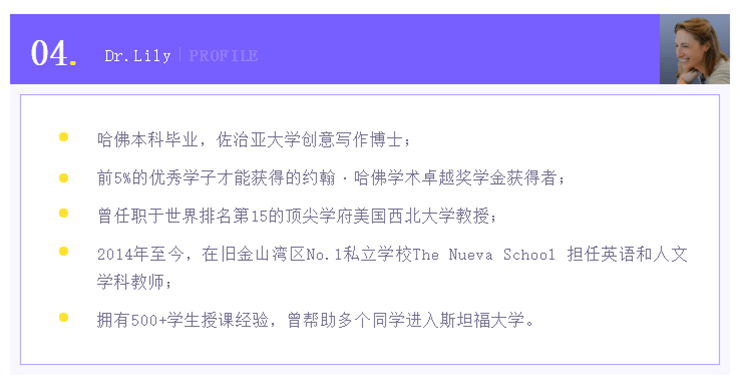
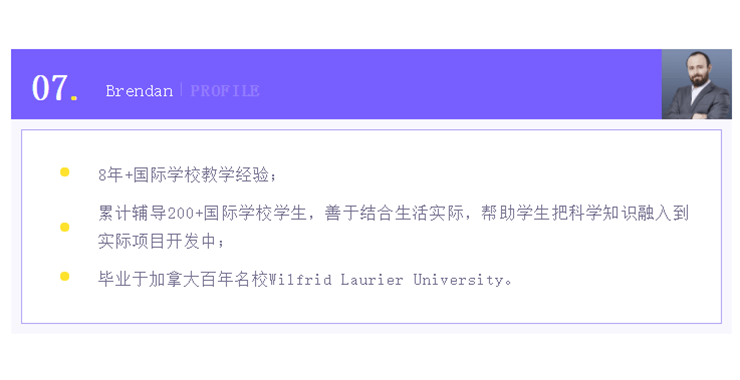
Our teachers offer a wide range of 1-on-1 subjects including English, Social Sciences, and Maths.
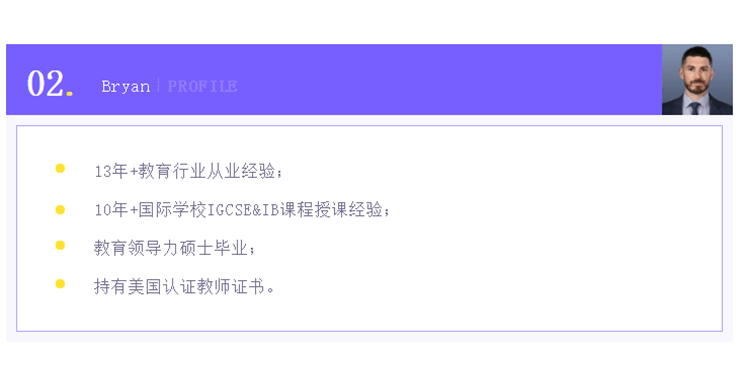
Meet some of our highly qualified and experienced teachers!

Why Should I Choose 1-on-1 Services?
Perhaps your child is preparing to study abroad or applying to a new school and he or she would like a more intensive and targeted approach in order to polish his or her skills. Alternatively, your child might not feel challenged enough with his or her current curriculum, and needs an alternative approach that is more appropriate for his or her ability level.
There are a number of reasons a parent might be searching for services such as this, and we can assure you that we will always work to understand you child’s unique situation and provide the service that is best for them.
How Does it Work?
With our hands-on approach, and orientation process, we will assess your child’s knowledge and skills based on current assessment data, writing ability, dan banyak lagi. Based on our findings, we will select the teacher best suited for your child’s needs. All of Reach Out’s teachers have been carefully selected, and have years of experience in teaching challenging curriculums, such as IGCSE, IB, dan AP, in top schools from around the world.
Our process is goal-oriented. We find out exactly what your child needs to reach their educational goals, and then we create a unique and tailor-made learning path that will best suit your child’s particular needs.
What Else Does Reach Out Offer?
In addition to 1-on-1 services, Reach Out offers a wide variety of courses specifically designed to challenge and engage your 2nd to 8th grade child with above grade level content in order to help them prepare for the rigor of programs such as IGCSE, IB, dan AP.
How Can I Learn More?
To find out more about our 1-on-1 services, please contact one of our Education Consultants today to find out more! We look forward to helping your child reach his or her educational goals for a bright future!
Who We Are
As you may have noticed, we have been growing and have some exciting additions to what we offer here at Reach Out. As it has been a while since we introduced ourselves, we thought we would share our story with you to help you better understand who we are and what we do!
Our Mission
Reach Out’s mission is to connect students with expert educators who create and deliver original, inspiring, world-class curricula. We have embarked on this journey so that we may help students understand how to find their own unique voice and uncover the creative and valuable ideas that lie within each of them. With their voices, they have the power to change the world, and we wish to empower them to do so.

Our Vision
Reach Out strives to be an internationally recognized educational institution that allows students to access top level international curriculum and educators, no matter where in the world they are. Our students will be perceptive, curious, and critical thinkers who make informed choices as excellent problem solvers and communicators. Reach Out students will achieve their academic and personal goals and dreams from Primary School to University, placing their brilliant futures within reach.

Our Core Values
These are the principles which shape Reach Out:
Our Story
Reach Out was created by a small group of dedicated mothers, perhaps much like yourself. They were brought together by a common vision for the educational needs of their children. Some were looking for an educational program that could offer their children access to the ideas, teaching philosophy, and methodology that matched what they had experienced while living abroad. Others were looking for an internationalized curriculum that their children could access to enrich their educational experience in China. What they shared in common was a desire for a rigorous program that also opened the doors to creative and critical thinking, self-reflection, and personal expression - the hallmarks of a strong international curriculum. After spending considerable time exploring various options, these moms were not able to find anything that quite met their children’s needs.
Jadi, they did what any good mother would do, given the chance, dan menemukan cara mereka sendiri untuk menawarkan kesempatan belajar terbaik kepada anak-anak mereka yang dirancang untuk membantu mereka berkembang. Mereka berkonsultasi dengan guru ahli dan bekerja dengan orang tua lain untuk menemukan cara terbaik untuk memenuhi kebutuhan anak-anak lain yang memiliki tujuan serupa. Anak-anak, kami berharap, seperti milikmu.
Orang tua berkomitmen untuk itu:
Kami senang untuk mengatakan bahwa para ibu ini telah mencapai tujuan mereka. Saat ini Reach Out menawarkan rangkaian lengkap kursus yang ketat namun menarik di mana siswa belajar secara mendalam sambil bersenang-senang dan menciptakan hubungan yang bermakna dengan guru dan rekan-rekan mereka.
Semua ini karena komitmen ibu pendiri kita terhadap pendidikan dan kebahagiaan anak-anaknya.
Apa yang Membuat Kami Unik?
Meskipun kami memahami bahwa orang tua memiliki beragam pilihan dalam hal program yang memperkaya pendidikan anak-anak mereka, kami yakin kami menawarkan banyak kualitas unik yang tidak mudah ditemukan di tempat lain.
Tim kami terdiri dari para pendidik yang sangat terampil dan berpengalaman yang telah menciptakan program yang unik dan ketat berdasarkan standar sekolah internasional, yang mempersiapkan siswa yang lebih muda untuk mengambil kurikulum yang ketat seperti IGCSE, IB, dan AP.
-Program dan kurikulum satu lawan satu kami dirancang untuk melampaui kebutuhan pendidikan siswa kami
-Filosofi pengajaran kami untuk menginspirasi dan memberdayakan siswa, dan metodologi pengajaran yang memungkinkan siswa mengeksplorasi pengetahuan secara luas dan mendalam sekaligus mengembangkan kecintaan belajar
-Komitmen kami terhadap kesuksesan jangka panjang siswa kami seiring dengan upaya kami untuk membekali mereka dengan keterampilan penting yang mereka perlukan untuk sukses dalam karir masa depan mereka dan dunia di luar sekolah
- Umpan balik terperinci yang kami berikan dengan semua penilaian siswa kami, sehingga siswa mengetahui di mana mereka berhasil dan di mana mereka dapat meningkatkannya, serta materi tambahan dan instruksi yang diperlukan untuk membantu siswa kami menutup kesenjangan dalam pemahaman
-Dedikasi kami untuk mengembangkan pemikiran kritis dan keterampilan pemecahan masalah siswa kami, yang penting bagi masa depan mereka, serta masa depan masyarakat global kita
-Our promise to hire all of our teaching and non-teaching staff based on their mutual passion for education
-Our ability to empower students to use the language, knowledge, and skills they acquire to develop themselves beyond the classroom and into curious, lifelong learners who set and pursue challenging, fulfilling, and worthwhile goals.
-Our hands-on, individualized approach to creating a learning path for our students so that no matter what grade level they are when they join us, they will be equipped with the tools necessary to improve and grow rapidly
-Our commitment to empowering our clients with information and experiences that will help them make the absolute best choices for their child's education by offering informative articles, videos and workshops.
Our Curriculum
Our Blue Line curriculum, yang mencakup kursus untuk siswa di Kelas 2 ke 8, dirancang oleh pendidik ahli dengan gelar tingkat lanjut di bidang studi mereka yang telah menghabiskan waktu puluhan tahun di beberapa sekolah internasional terbaik di dunia. Kami menggunakan desain kurikulum terbalik sejak tahun pertama program seperti program IGCSE yang diakui secara luas dan dihormati.
Karena para pendidik kami telah menghabiskan waktu bertahun-tahun untuk mengajar kursus sebelum IGCSE, IGCSE, Kurikulum IB dan AP atau A Level, mereka memahami apa yang dibutuhkan siswa untuk berhasil dalam program tersebut. Jadi, setiap aspek kurikulum kami telah dibuat untuk memastikan bahwa semua siswa kami memasuki hari pertama Kelas mereka 9 merasa percaya diri, lengkap, dan bersiap untuk memenuhi tuntutan kursus yang ketat ini.
Kami menawarkan berbagai kursus dalam mata pelajaran bahasa Inggris, Matematika, History and Geography. See below for more detailed information on our full course offerings.
Additional Services
We are also pleased to announce the creation of our Silver Line, which offers bespoke educational services that take an individualized approach to meeting our students' needs. We begin with a deep assessment of each student's educational goals and needs, and then create and implement a scheme of work with which our expert educators will use to guide your child through the academic challenges of High School in order to prepare them to eventually attend their dream university.
We also offer 1-on-1 services at all grade levels for parents who wish to offer their children more individual care and instruction. Konsultan Pendidikan ahli kami akan memastikan untuk mencocokkan anak Anda dengan pendidik terbaik untuk kebutuhan dan tujuan spesifiknya.
Bergabunglah dengan Kami!
Kami menantikan untuk bertemu keluarga Anda dan mendiskusikan bagaimana Anda dapat menjadi bagian dari keluarga Reach Out kami; yang belajar bersama, peduli satu sama lain, mengatasi tantangan bersama-sama, dan merayakan kesuksesan satu sama lain. Silakan hubungi kami hari ini untuk mengetahui lebih lanjut.
Kami berharap dapat mendengar kabar dari Anda segera!
Being a parent is hard. In fact, with the changes in our world today, it might just be one of the challenging moments we have had to face in decades. Change leads to uncertainty, and uncertainty can lead to stress. Stress certainly affects all areas of our lives, sometimes it will impact our relationship with our loved ones the most; especially our children.
Our children can be complicated (let’s face it, so can we!), and it is a daunting task to ensure that every move is the “right” one. That all of our conversations, demands, requests, plans, praises and criticisms mean something. Every moment we spend talking to our kids, we hold the hope that these words will be enough to fill our children with the hope of a great future at a time where the future is so uncertain. Times change, and this too shall pass, but one thing we can guarantee is that we will never have a second chance at spending a childhood with our children.
Sebagai orang tua, we often ask ourselves if we are in fact doing the right thing, wondering how we can get through to our kids, trying to understand our children better, and sometimes feeling like a guilty failure because we tell ourselves we are doing it wrong. Oftentimes, that is not the case, but there is no instruction manual on how to raise a child that will work for everyone in all situations. Sure, there is a lot of advice, an overwhelming amount of it, but again, most advice is just that; guidance and recommendations by people who don’t know you or your child. Some of it is helpful, and some of it…not so much.
One thing that we cannot deny though is the importance of a healthy relationship between parent and child.
Research shows that:
It is essential to make the time to nurture a relationship with your child, and perhaps even more imperative, making sure the interactions we have with our children during that time are positive. This is something that many parents find challenging, which is why we created a parent book club for the book How to Talk So Kids Will Listen and Listen So Kids Will Talk by Adele Faber and Elaine Mazlish. Together we learned ways to positively communicate with our children in order to strengthen our bonds. We spent time discussing ideas from the book, as well as had a virtual meet up to role-play some of the strategies from the book. On top of that, we invited Middle School Guidance Counselor, Regina Wehner, to provide parents with a workshop in understanding our child’s cognitive and emotional development.
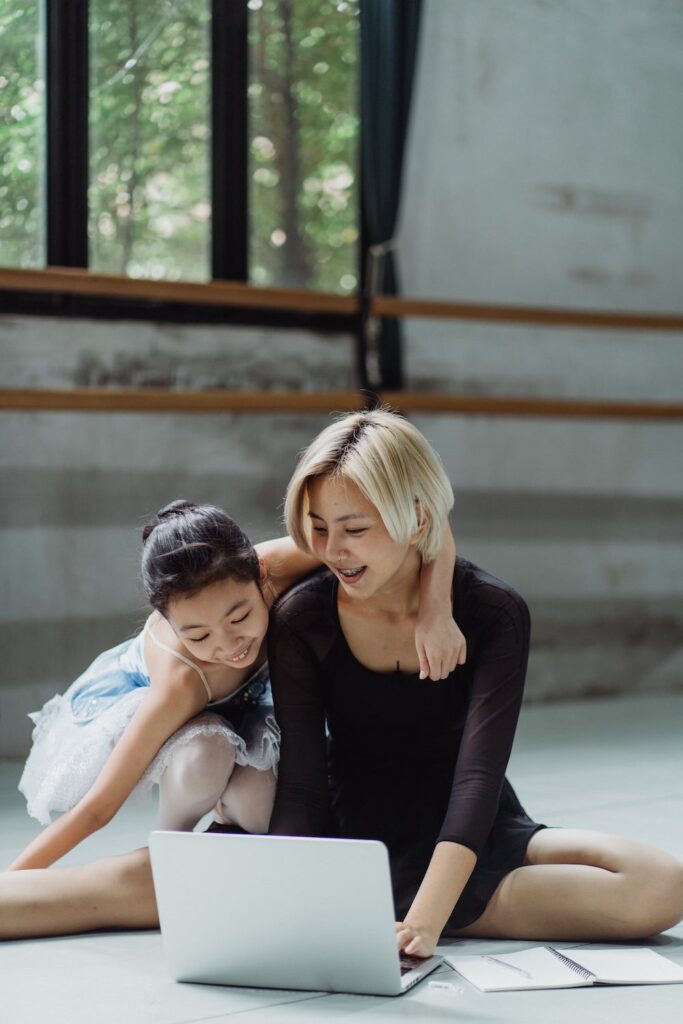
Here are some highlights we would like to share with you!
First, from How to Talk So Kids Will Listen and Listen So Kids Will Talk, here are two of our favorite strategies:
Children have difficulty regulating their emotions, as the brain’s emotional regulation center is one of the last to develop. This means that they need our help in the form of compassion and modeling. This can be so challenging, especially when we may have difficulty managing our own emotions at times! We have an easy strategy for you that will only require two things:
When your child comes home upset about something that happened at school, instead of lecturing and offering our sage advice, we can simply listen to their concerns and repeat the ideas back to them. For example, if your child comes home upset and says something like, “Ugh, today Elizabeth and Sarah were so mean to me! They completely ignored me and I hate both of them now!” Instead of saying, “Elizabeth and Sarah are your best friends. It’s not a big deal and I am sure you will be fine tomorrow,” which could invalidate your child’s feelings, you can say, “Oh, I see. Elizabeth and Sarah made you feel a bit left out. That probably made you feel a bit sad and mad.” At this point your child might keep talking and open up to you, which is great! It means they trust you and you are making them feel better. Continue to listen, nod, say, “Mmmhmm,” and repeat what they say. Having you simply listen will likely make your child feel 100% better and ready to face their next challenge!

2. I wish!
Our children often express their desires in the form of wishing they had things they don’t have or wishing things were different than the way they are. For example, children may say, “I wish I didn’t have to do all that homework.” We may reply, “Well, you do and that’s that!” or “It’s what you have to do. It’s your responsibility so you need to do it now!”
This may escalate into a battle of wills as parents feel frustrated that they keep hearing the same complaint and repeat the same reasoning. The children feel frustrated because their opinions are being invalidated and they feel misunderstood. Dengan baik, don’t worry, we are here to help! We have a little trick that will help you turn the conversation around, and that is to agree with your child. It may sound counterintuitive, but we have firsthand experience with this trick and it works wonders!
For example, if your child says, “I wish we could go to the park today like I wanted!”
Instead of saying, “I can’t, I am too busy,” or “Yes, but we can’t, it’s raining,” we can say, “I wish we could too! We could go to the park and have a picnic! We could fly a kite and blow bubbles! Why don’t we have a picnic in the living room and after that we can blow bubbles in the bathroom!”
The first part gets the kids excited and their imagination going, taking them to a happy place. The next part makes them feel heard and connected to you.
Sekarang, some highlights from Ms. Wehner’s workshop:
*Please help me choose these! :)*
If you would like to join one of our workshops or book clubs in the future, make sure to follow us and stay tuned! We have great things coming up this fall!
Many parents ask us what the fastest way their child can improve their writing. While we firmly believe there are no shortcuts to becoming a truly effective and skilled writer, there are some things students can incorporate into their writing to help take it to the next level more efficiently. Like with anything trying to be mastered, the key to success lies in hard work and repetition. Practicing these skills regularly will help your child reach their educational goals.
This article will be the first in a series of articles that will focus on skills suited for different types of writing. This week, we will focus on descriptive writing tips.
Descriptive Writing Tips:
Descriptive writing is a true art form, as its purpose should be to create an image in the minds of the readers. One cannot tell a story on action and dialogue alone, and one cannot convey deep meaning and emotion in a poem without painting a picture with his or her words.
One powerful way to excel in description is to add adjectives and adverbs wherever possible. For example, if your child is writing a story he or she might write something like:
“Harry went outside and started looking for his friends.”
While this sentence conveys a basic meaning, it’s effect on the reader is also basic. By adding descriptive language in the form of adjectives and adverbs, we can quickly and effectively add imagery to the sentence:
“Harry zipped out the front door, slamming it shut behind him. His heart raced as he ran around the neighborhood eagerly looking for his friends.”
In the revised sentence, we see descriptions that tell us not only the action that is taking place, but also helping us feel the emotion of the character, an important aspect of storytelling.

Another great way to make a story or poem more effective is by adding figurative language, such as similes. Similes are comparisons that use like or as that can be used to help the reader imagine what is happening more clearly.
For example, your child might write something like:
I was so happy!
It was so cute!
He was so scared!
We can add similes to help create an even better result:
I was as happy as a a kitten in a yarn shop.
It was a cute as a baby panda playing in the snow.
He was as scared as a rabbit that just heard a wolf howl.

Our final tip for descriptive writing is to choose vocabulary that is so precise that it communicates exactly what the writer wants the reader to feel. Often, students will write descriptions that are a bit vague, with sentences like:
He was very tired.
The movie was very boring.
They were very cold.
The room very hot.
Again, these sentences convey a simple meaning, but in descriptive writing, that is simply not enough. Effective description uses vocabulary that has an impact, and we can achieve that by choosing only the best words to convey the most exact meaning.
See how we can take the sentences above from ordinary to extraordinary by replacing part of the sentence with powerful vocabulary:
He was exhausted.
The movie was unimaginative.
They were chilled to the bone.
The room was roasting.
The good news is that your child doesn't need to rely on his or her current vocabulary knowledge in order to succeed in creating sentences like those above. The thesaurus has all of the words they need to create memorable descriptions.
We hope these tips have been helpful! If you would like for your child to learn how to put these skills into practice with one of our passionate educators, stay tuned for coming announcements on our new summer and fall courses!
Next week, we’ll have a look at persuasive writing tips!
Tell us a bit about yourself.
I grew up in five different countries (Sweden, England, Germany, South Africa, and Canada). Integration into a diverse spectrum of cultures growing up has made me see the world with an open mind. I currently reside in Canada and work as both a university lecturer and a Math teacher at Reach Out. Outside of work I really enjoy sports such as badminton and chess, which I played at a competitive level for many years.

What is your educational background and qualifications?
I received a Bachelor of Science Degree from the University of British Columbia (UBC) and an obtained my MSc at the same university. My graduate work involved experimental geoscience where I designed an apparatus to investigate how diamonds reach the surface of the Earth through high velocity magmas. I published articles in two high impact journals and presented the work across Canada and Europe.
During my graduate studies I had the privilege of lecturing a few classes which transitioned into a lectureship position. Teaching at the university level involves lecturing a class of over 200 siswa, which is very different to the work I do at Reach Out, but has helped me develop a dynamic teaching style.
Additionally, I have been teaching Math and Science both privately and through educational organizations for over 6 bertahun-tahun.
Why did you join Reach Out?
I joined Reach Out because the prospect of being able to deliver high quality education from around the globe without border restrictions resonates with me.
I feel that the reason I am committed to staying at Reach Out is more important. The personalized classes being delivered has allowed me to connect with the students, making their progression much more meaningful to me. Some students have been together with me through multiple grade levels and I feel immensely proud to have played a role in their education.
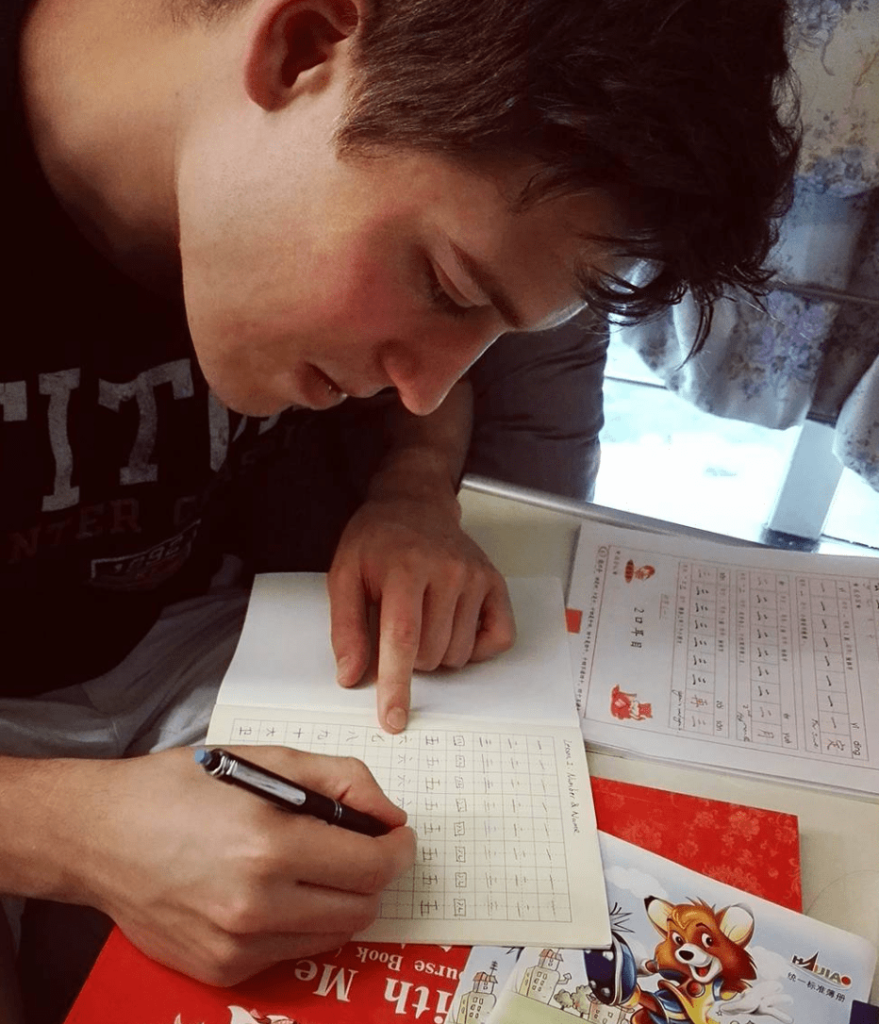
What is your educational philosophy?
Having a background in experimental science has allowed me to see value in making breakthroughs through experimentation. By allowing students to experiment with different methodologies while offering guidance is an extremely effective way of teaching students to not be afraid of failure. Richard Fuller correctly said, “There is no such thing as a failed experiment, only experiments with unexpected outcomes.” Students often start my classes afraid to answer questions, discuss with their classmates, or write on the board since they don’t know the answers. Since I am always more focused on solutions rather than answers, students’ are rewarded for trying new techniques, discussing failed methods, and asking questions about their classmates’ work. I found this to produce a phenomenal learning environment and takes a lot of pressure off the students.

What is your favorite thing about teaching Math?
My favorite thing about teaching Math is the exciting challenges it provides. After teaching Math for many years, I have come to realize that students see the world from a unique perspective, which more often than not, is very different from my own. This diversity produces a wide spectrum of learning styles and requires me to stay very flexible with the methodologies I use in my teaching.
Math is a complex subject which has provided us with a universal language to better understand the universe that surrounds us. Having a good problem solving ability is a byproduct of learning Math and crucial for success in the modern world. For these reasons I have the responsibility to transform a traditionally dry and boring subject into something exciting by creating compelling lessons and using creativity to inspire my students. This will always be something I love about my job.
Who is your favorite mathematician and why?
This is a tough question, and it’s hard to pinpoint one Mathematician since I utilize the works of so many Mathematicians in just one lesson. If I had to pick it would be either Johannes Kepler or Nicolaus Copernicus since I also love astronomy. Their Math not only challenged everything that was believed about our solar system at the time, but also formed the foundations for understanding planetary motion. Space travel has relied heavily on these concepts.
If you could only give parents one piece of advice when it comes to helping their child improve in Math, what would it be?
One thing I have worked on a lot with my students, is getting them to explain their solutions to me regardless of how easy it may seem. Being able to arrive at the correct answer in certain school curriculums may not require a complete understanding, but being able to explain a solution well does require a good understanding. Make sure that your child is always showing very clear steps in their work and that they can explain their steps to you. This certifies understanding and shows they are prepared for questions which test the same concept but may be worded differently.
What is one fun fact about yourself?
I really like learning languages! After growing up in many different countries I can speak English, Swedish, and German fluently. For the past two years I have been working to add Chinese to my collection and have enjoyed the unique challenges that learning this complex language has provided me with.
The Secret Garden is a piece of classic literature that has been part of an untold number of childhoods (if you missed our article on why children should read classic novels, see it linked below!). It is a powerful tale of friendship and discovering oneself that resonates with our souls.
The Secret Garden is about a young girl named Mary Lennox who loses her family and everything familiar with her due to a cholera outbreak in India, where her father was working as a British Army Captain. As a child, Mary was quite neglected, but indulged by family’s servants, so she was a spoiled child with a terrible disposition. She had very few traits that would help her cope with a new life in England, where she was sent to live with a grouchy distant relative, Tn. Craven.
Tn. Craven had very strict rules for Mary to follow at her new home at Misselthwaite Manor in Yorkshire, which included her being forbidden to enter various rooms inside the giant mansion, as well as forbidden to enter one of the gardens on the sprawling property, which belonged to his beloved late wife. As Mary begins to explore her new home, she begins to find a sense of happiness and regains her health after being sickly for much of her childhood. After a robin helps her find the key to the secret garden, she finds a sense of purpose in restoring the garden, much as she restores her inner self. Through the thorns and dried leaves of winter, she finds much more lies within.
Aided by new friend Dickon, Mary develops her first friendships, and uses her newfound strength and kindness to help her bedridden cousin Colin, whom she finds tucked away in the manor. Friendship strengthens both Mary and Colin, and in the end, everyone witnesses a miracle only made possible by these close bonds and belief in oneself, two very important themes in the novel.
Young people will love reading this fantastic story of friendship, overcoming obstacles, and experiencing the healing power of nature. The characters and the lessons they teach us will surely touch your child and help them experience the power of a great story.
If you would like an opportunity for your child to experience this story with others, we are happy to let you know that we will be reading The Secret Garden as the first novel in our Young Classics Level 2 Course this summer.
In the course, we not only read the novel, but we also learn and apply new vocabulary from the book, discuss important literary techniques used by the writer, and practice writing summaries, a key skill that many students find challenging

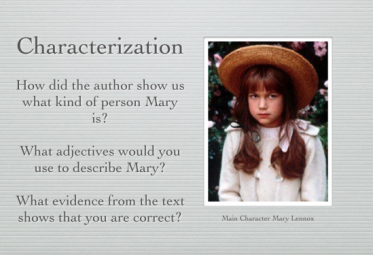
If you are interesting in learning more about Young Classics, or and of our other excellent and engaging courses, contact one of our Education Consultants today! We hope to work with your child very soon!
Literature study is an important aspect of any excellent academic program, and that is because it helps to teach students a wide range of knowledge and skills that are essential for success in many areas of life. While studying literature, students learn about important events and people throughout history, they consider cultural perspective and increase their own understanding of acceptance of different ideas and beliefs, and they learn how to analyse the words of others in order to form a deep understanding of new ideas and ways of communicating. In short, it exposes students to a toolbox of ideas, techniques, strategies, theories, and more that they will carry with them throughout their life, shaping the way they approach the world.
Why do we offer this course?
Reach Out students typically pursue high school programs such as IGCSE, which includes challenging courses such as English Language and Literature and English as a First Language. Later, most of those students will take on the challenge of IB and AP level programs, in which they must take on the task of reading a variety of literature. Our aim is to expose students in upper primary and middle school to a wide range of advanced literature so that by the time they reach high school they possess the knowledge and skills to hit the ground running, and therefore achieve to a higher level.
This course is designed for Grade 7-9 siswa.
The Objectives of our Advanced Literature Course are to:
✪ Enhance students’ ability to understand and discern literary techniques used English and American literature, and the ability to communicate the effects of those techniques;
✪Improve children's literary comprehension skills and increase their understanding of British and American culture;
✪ Under the guidance of our expert educators, learn the power of language and storytelling in a challenging yet engaging way.
Meet Our Teachers
*Insert teacher bios here for Barry, Anthony, and John*
Our Book Selections:
Cry the Beloved Country by Alan Paton

Set in South Africa in the 1940s, award-winning Cry the Beloved Country tells the story of a Zulu Pastor, Steven Kumalo, who travels from his village to the city of Johannesburg. Along his arduous and heart-wrenching journey, he discovers that his sister and son have found themselves in terrible situations that he must now face with them. The characters’ vastly different lives become unexpectedly woven together through tragedy during a dark time in South Africa’s history. Namun, through tragedy and challenges, the true nature of the human spirit can be found and uplift those who need it most.
Dracula by Bram Stoker

The legend of Dracula has loomed large in the minds of readers and movie-goers for generations. Bram Stoker based the infamous character of Dracula on the legend of the real life ruler of Wallachia, Vlad the Impaler. Stoker was able to take this dark corner of history and turn it into a legendary novel told through journal entries, letters and telegrams. As with any classic, Dracula has stood the test of time because it speaks to something very deep and meaningful within the human psyche.
Of Mice and Men by John Steinbeck
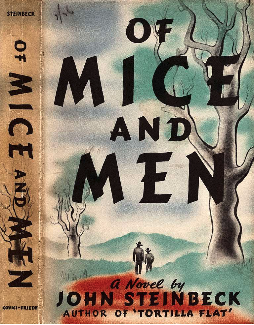
The Great Depression was a defining moment in American history that tested its strength as a nation, and placed the population in a precarious balance between life and death. In what is considered one of the greatest American classics, readers are introduced to two displaced migrant workers, George and Lennie. George is an intelligent young man, while Lennie is mentally disabled. George takes Lennie under his wing as they seek employment where few opportunities exist, trying to survive, yet still dreaming of the day they will have their own land and build a life. Their hopes are dashed when a devastating incident occurs that alters their lives forever.
What Students Will Gain
Develop an early sense of literary appreciation,
See the world from a more mature perspective
British and American classics contain thought-provoking moral and social issues. Reading the most influential classic literature thoroughly helps students become better readers, and begin the process of pursuing self-realization.
Improve understanding of culture and history
Learning allusions from classic British and American literature can help us bridge cultural differences. "The classics have opened the door to different worlds, different cultures, and different historical perspectives. Literature crosses race, culture, religion, and geography."
Self-reflection and personal growth
Many classic literature allude to our lives from the side: books that reflect similarities to our own lives are called "mirrors"; and those that give us a glimpse of different lives are called "windows." Whether it is a "mirror" or a "window", it further enriches the students' life experience and increases the courage and strength to face life.
Bergabunglah dengan Kami!
Contact us to discover more about our course. We sincerely hope to meet your child soon, and develop a love of reading classic literature together.
It’s back to school time and we know parents are getting ready for a new year with new beginnings. The start of a new year is usually met with a mix of excitement and a bit of anxiety, as students and parents look forward to new skills and experiences, but also might feel nervous about new routines and expectations.
Don’t worry, Reach Out it here to help! This year, we have 5 top tips to a fantastic start to the school year.
Understanding how your child’s school approaches education, what curriculum they use, what systems, and standards are used can be overwhelming for non-educators. Spending a bit of time each day reading your school’s website content, handbooks, and other resources can help you feel more confident in understanding what your child is learning at school and how they are learning. It’s also important to attend your child’s back-to-school night and informational sessions to get a better understanding of your child’s program as a whole. It also provides a great opportunity for you to establish a relationship with your child’s teacher. At any time if you still have questions, you can always e-mail your child’s teacher. They are there for you and your child, as they know that a great relationship with parents is a fantastic way to ensure academic, social, and emotional success for all students.
2. Make Sure to Catch Enough Zzzzs Before the ABCs
Sleep is so important for a child’s growth and development, and a lack of it can negatively impact a child’s academic achievement. In fact, research shows that sleep depravation in children can lead to higher rates of anxiety and depression. When we sleep, our brain processes the information from he day, finds the best system to file it away in out memories, and re-charges our systems for a new day. For various reasons, parents often find sticking to an early bedtime difficult, but with a clear routine, and time for adjustment, it can be easy! Anak-anak 3-6 years old should be getting 10-12 hours of sleep per day, 7-12 year olds should get 10-11 hours per day, Dan 12-18 year olds should get 8-9 hours per day. Creating a schedule where children get to bed earlier will make mornings easier as well, hopefully with less stress for both parents and children as they will be well rested and ready to start their day!
3. Ask the Right Questions at the Right Time
Sometimes parents are anxious to know how their child’s day was as soon as they get home from school, especially during the first few weeks. Those weeks are especially exhausting and full of ups and downs as your child learns to navigate new material, new friends, new teachers, and new expectations. Giving them time to come home and decompress is extremely important for their emotional and mental well-being. Once they have had some “me” time, parents can ask specific questions based on what they know they are working on, if they happen to know. They can go through their child’s homework diary with them and help them make a plan on how to tackle each task, as well as share in their enthusiasm for specific subjects, books, or information they also enjoy. Avoid asking, “How was school? What did you learn?” as kids respond much better to more specific questions, such as, “What did you do with your friends at lunch? What was the best part of your day? What was the weirdest or most wonderful thing that happened at school today?” Most importantly, parents should be fully present and listen intently when students answer, so they really feel valued and hear when they share.
4. Let Them Learn From Failure
This one can be extremely hard for parents to allow. We want our children to do well and reach their full potential, which means we might go over each assignment with a fine-toothed comb, correcting every mis-calculation or grammar mistake. Although parents have good intentions when we do this, we are taking away important learning opportunities from children when we do so. Back when we were students, many of our parents were often too busy or didn’t have the knowledge or capacity to help us with our school work, but we found a way to push through and try our best. If children are never given opportunities to fail when they are young, they might resist taking on challenges later in life for fear of failing at them. Namun, when we let them fail gently, such as on an assignment or at a little league soccer game, we are teaching them resilience. It’s not the end of the world, and they learn a valuable lesson; that we can try and not succeed, dust ourselves off, and try again next time.
5. Nurture Their Passions
New school years are an exciting time for many reasons, one of them being that they provide children a chance to discover new passions. If they are lucky, they will stumble upon something they truly love, and that they can become fascinated with enough to spend hours on end discovering. Helping a child find his or her passion is not always easy and takes time. Sometimes parents worry if their child focuses too much on a couple of things, and feel they need to expose them to as much as possible to help shape them into well-rounded individuals. Namun, if we look at the people who have shaped our world, it was because they had a laser focus on what they were passionate about. It was all they ever did or do. As humans, we naturally gravitate towards what we love most, and as long as it provides some sort of value on top of fulfillment, we should continue pursuing it. Jadi, don’t worry if your child protests going to one activity while running out the door to attend another. Maybe the one they love is the most valuable to their growth and development, and the one they don’t like isn’t that necessary after all.
We hope these tips have helped, and we wish you and your child the best in the coming school year! We are excited for the new school year and all of the challenges and hope it will bring.
Reach Out will be with you every step of the way, so be on the lookout for more information and more articles we hope you will love!