W Dotarciu do celu, wierzymy, że świętowanie sukcesów uczniów jest bardzo ważne. Miło nam ogłosić kolejnego Star Studenta - Emma!
Emma reprezentuje wszystko, co uczniowie mogą osiągnąć dzięki ciężkiej pracy i dążeniu do doskonałości. Nauczyciele Emmy uznają ją za uczennicę o wspaniałym podejściu do nauki, jest bardzo otwarty na instrukcje, i ma niezwykle wspierającą rodzinę, która często komunikuje się z nauczycielami. W klasie, Emma jest uważnym i uważnym słuchaczem, który jest na tyle pewny siebie, że może dzielić się swoimi pomysłami, ale wystarczająco cierpliwy, aby dać każdemu swoją kolej. Nie ma nic przeciwko podejmowaniu ryzyka, i jest w stanie wprowadzić swoją osobowość do swojej pracy.
Emma jest obecnie zapisana na naszym poziomie kreatywnego czytania i pisania 4 Kurs, i pokazała prawdziwy dar umiejętności tworzenia mocnych obrazów w swoich pismach. Na początku semestru, ukończyła recenzję oddziału Blue Frog w Disneylandzie w Szanghaju.
Emma pokazała, że potrafi krytykować określone aspekty miejsca, i rozwijać swoje pomysły, wykorzystując odpowiednie szczegóły.
„Zarówno widok, jak i lokalizacja są bardzo satysfakcjonujące. W nocy możemy usiąść na zewnątrz i cieszyć się widokiem zamku Disneya i fajerwerkami.”

W miarę upływu semestru, Emma wykazała rozwój swoich umiejętności pisania, i zaczął wykorzystywać bardziej zaawansowane techniki literackie. W zadaniu dotyczącym opisu krajobrazów, Emmie udało się stworzyć mocny wizerunek, używając precyzyjnego słownictwa i języka figuratywnego.
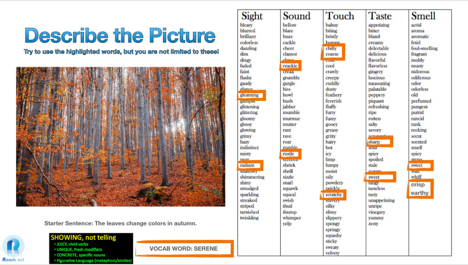
„Futrzasty mech rozpryskał się na słone skały, gdy rozprzestrzeniły się daleko, jak dżem na chlebie. Kiedy fontanna wpadła do stawu poniżej, utworzyły się rozmazane zmarszczki.
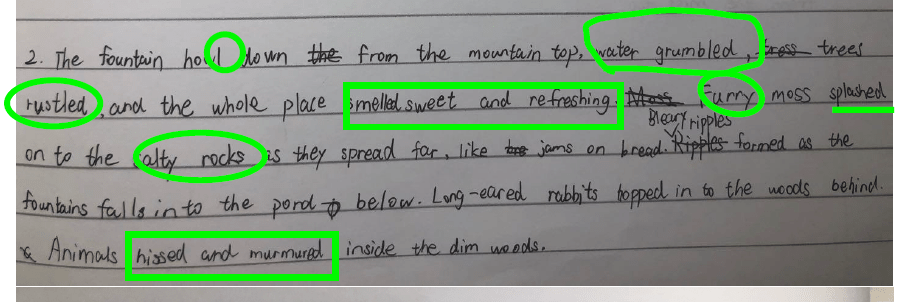
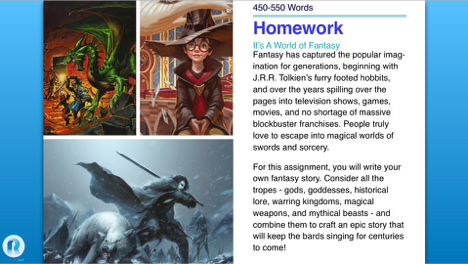
Emma w dalszym ciągu stosowała wnioski, których nauczyła się podczas kursu, a jej zdolności pisarskie stały się silniejsze. W ostatnim zadaniu dotyczącym pisania narracji fantasy, Emma celowo i skutecznie skonstruowała scenerię i charakter swojej historii.
„Błyszczące słońce świeciło przez okno i padało na miękką powierzchnię, jedwabiste prześcieradło. Obok otwartego okna kwitły słodkie kwiaty w ciepłych kolorach. Na orzeźwiającej ścianie w kolorze zieleni wodorostów wisiały niewyraźne, ale staranne rysunki.
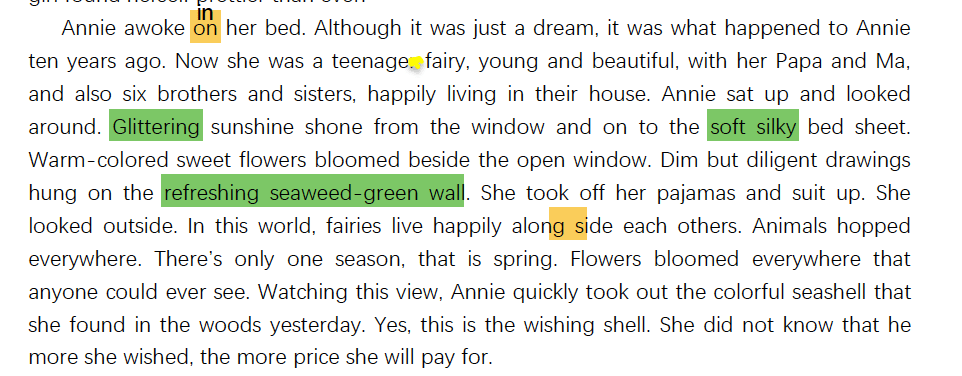
Jak widać, Emma wykazuje cechy obiecującej młodej pisarki. Jej determinacja do poprawy, i staranne zastosowanie zdobytych lekcji pomogły wynieść jej pisanie na bardziej zaawansowany poziom.
Dziękuję Emmo, za bycie taką GWIAZDĄ! Z niecierpliwością czekamy na Twój rozwój przez długi czas. Wiemy, że to dopiero początek wspaniałej podróży.
Jako pedagodzy, często zadawano nam to pytanie, „Jak oduczyć dziecko czytania komiksów?„Rodzice martwią się, że komiksy nie mają wartości edukacyjnej, nie są wystarczająco rygorystyczne pod względem akademickim, albo co najgorsze, strata czasu ich dziecka. Do tego, nasza odpowiedź zwykle ich zaskakuje, i ta odpowiedź brzmi, „Niech czytają komiksy!”
Zrozumiałe jest, że rodzice byliby nieco zaniepokojeni, ponieważ panuje przekonanie, że komiksy służą wyłącznie do czytania dla przyjemności, Jednakże, komiksy mają wiele zalet poza pomaganiem nam w zabijaniu czasu.
Komiksy i powieści graficzne nie są nowymi formami pisarstwa. Oczywiście, cieszyły się dużym zainteresowaniem od pokoleń. Przez lata, gatunek zmienił się w gatunek o znacznej głębi i znaczeniu, dlatego zachęcamy rodziców, aby nie tylko pozwalali swoim dzieciom czytać komiksy, ale także wspierać ich w tym procesie.
Oto nasze najważniejsze powody, dla których warto czytać komiksy (szczególnie latem!):
Dla studentów, którzy nie są rodzimymi użytkownikami języka angielskiego, komiksy to dla nich świetny sposób na rozpoczęcie zabawy z literaturą angielską. Dla wielu dzieci, przejście od podręcznika do języka angielskiego do powieści może być bardzo trudne, ale komiksy mogą zapewnić im niezbędny pomost, aby zbudować pewność siebie i płynność czytania. Wskazówki wizualne na obrazkach pozwalają uczniom głębiej zrozumieć fabułę i postacie, a także nowe słownictwo. Ponadto, zapoznaje ich ze skutecznymi środkami literackimi, jak onomatopeja (pomyśl POW! ZADATKI! BRZĘCZENIE!) i idiomy (ilustracja pokazująca znaczenie idiomu like, „Kot złapał twój język?” ma o wiele większy sens niż samo podgrzewanie idiomu!).

2.Wzmocnienie wnioskowania
Wnioskowanie to kluczowa umiejętność czytania, z którą wielu uczniów ma problemy w przypadku standardowych ocen czytania. Wnioskowanie ma miejsce, gdy wyciągamy wnioski na podstawie tego, co przeczytaliśmy. Oto kilka przykładów pytań, z którymi uczniowie spotkają się podczas zadań lub ocen związanych z czytaniem ze zrozumieniem, „Jak się czuła ta postać, kiedy?”, „Jakie wnioski możesz wyciągnąć z…” i „Jaka była lekcja z tej historii?„Komiksy wymagają, aby uczniowie „czytali między wierszami”, aby wywnioskować informacje, które zwykle przekazuje narrator w powieści, dzięki czemu mogą zdobyć wiele cennych doświadczeń w zakresie wzmacniania tej umiejętności poprzez czytanie komiksów.
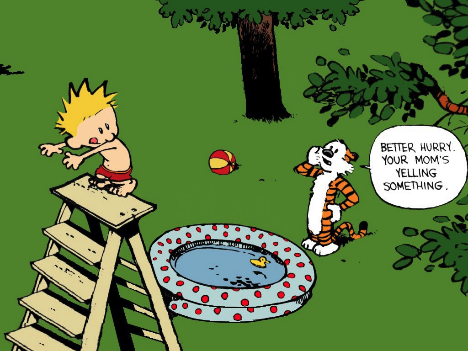
3.Moc słowa!
Często w komiksach i powieściach graficznych, autorzy posługują się dość zaawansowanym słownictwem, zarówno jako część fabuły, jak i w imionach bohaterów. W 2016 na słynnym na całym świecie Comic-Conie w San Diego, Kalifornia, panelista złożony z pedagogów omówił siłę komiksów w budowaniu słownictwa uczniów. Jamesa Bucky’ego Cartera, powiedział autor książki Building Literacy Connections with Graphic Novels, „Masz Kolosa, i jest taki duży, gigantyczny metalowy facet. Naprawdę dobrze rozumiesz, co oznacza słowo „kolos”, i to jest dobre słowo za 10 centów. Moc Banshee krzyczy. Masz te znaki, które ucieleśniają słowa, którymi są. To świetny sposób na naukę nowych słów, oprócz wskazówek kontekstowych.”
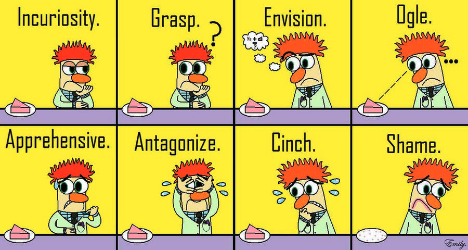
Po przeczytaniu tego możesz po prostu pozwolić dziecku zanurzyć się w czytaniu komiksów lub powieści graficznych! To muzyka dla naszych uszu. Jeśli nie jesteś pewien od czego zacząć, mamy kilka ulubionych uczniów, które Twoje dziecko może chcieć wypróbować!
Człowiek-pies autorstwa Dave’a Pilkey’a

Miles Morales Spider-Man autorstwa Jasona Reynoldsa

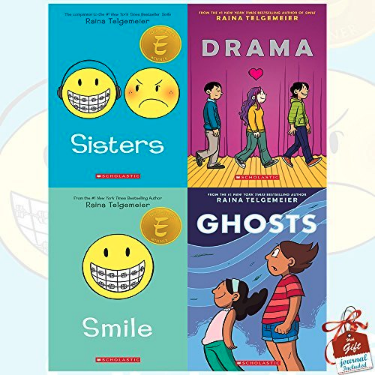
Uśmiechy, Siostry, Duchy, Dramat i inne opowiadania Rainy Telgemeier
Bone autorstwa Jeffa Smitha

Szukasz więcej możliwości czytania w lecie dla swojego dziecka? Aby uzyskać więcej informacji na temat naszych letnich kursów czytania, skontaktuj się z jednym z naszych konsultantów ds. edukacji. Z niecierpliwością czekamy na wspólne czytanie z dzieckiem!
Sezon egzaminacyjny już trwa, i może to być bardzo stresująca pora roku zarówno dla uczniów, jak i rodziców. W Reach Out chcemy dołożyć wszelkich starań, aby złagodzić lęk przed egzaminem, oferując unikalne wskazówki dotyczące nauki, których być może nie próbowałeś.
Wielu rodziców i nauczycieli, którzy chcą dobrze, często kieruje się konwencjonalną mądrością związaną z nauką, Jednakże, Jeśli przyjrzymy się ciekawym podejściom opartym na badaniach, zobaczymy, że istnieje wiele skutecznych sposobów uczenia się! Zawsze dobrze jest próbować nowych rzeczy, szczególnie dla dzieci. Już w dzieciństwie mogą doświadczyć nowych sposobów działania, i kiedy są trochę starsze, mogą wybrać sposób najlepiej odpowiadający ich osobistym potrzebom i stylowi.
Teraz, przyjrzyjmy się trzem wyjątkowym sposobom uczenia się.

Różnorodność jest przyprawą życia – nawet podczas nauki
Dla wielu, wiele lat nam to mówiono, abyśmy mogli dobrze się uczyć, powinniśmy uczyć się codziennie w tym samym miejscu; miejsce, w którym jest cicho, dobrze oświetlony, i posiada wszystkie nasze materiały. Chociaż może to być prawdą przez pewien czas, kiedy się uczymy, badania pokazują, że nasze mózgi faktycznie działają lepiej, gdy zmieniamy miejsce, w którym się uczymy. Całkiem zaskakujące, Prawidłowy?
W badaniu przeprowadzonym od początku 1978, otrzymali studenci 40 słownictwo do nauki. Jednej grupie poproszono o dwukrotne przestudiowanie listy w tym samym miejscu. Drugiej grupie poproszono o przestudiowanie listy w dwóch różnych miejscach. To, co znaleźli, było, grupa, która zmieniała miejsca nauki, faktycznie lepiej radziła sobie z późniejszym zapamiętywaniem słów. A teraz dlaczego? Dobrze, nasz mózg często tworzy połączenia z informacjami w oparciu o nasze środowisko, więc im bardziej zmieniamy nasze środowisko, tym bardziej dajemy naszym mózgom szansę na zatrzymanie informacji, ponieważ będą one przywiązywać się do większej liczby rzeczy. Może to być również powód zastosowania jednej techniki wizualizacji, gdzie wizualizujemy rzeczy, które chcemy zapamiętać, w określonych miejscach w znanym nam środowisku, może być równie skuteczny. Dla studentów, zwykła zmiana środowiska może załatwić sprawę!
Miłej zabawy!
Niektórzy rodzice mogą błędnie sądzić, że ich dziecko śmieje się lub jest podekscytowane podczas nauki lub nauki, może marnują swój czas. Jednakże, niekoniecznie tak jest.
Jako rodzic, w Twojej pracy lub biurze możesz od czasu do czasu organizować specjalne warsztaty. Warsztaty są zwykle wykorzystywane jako narzędzie pomagające poznać nową strategię, pomysł, lub informacje, które pomogą Ci dowiedzieć się więcej w pracy. Sesje te są często prowadzone przez osoby specjalizujące się w tworzeniu motywujących i inspirujących warsztatów, które ożywiają i dodają pracownikom energii. Dni mogą być długie i intensywne, ale jeśli są zrobione dobrze, pracownicy mogą wyjść pewni swojej nowej wiedzy i umiejętności.
To samo tyczy się młodych ludzi. Wprowadzenie gier i zabawy jako sposobu nauki do egzaminów nie tylko wywoła uśmiech na twarzy Twojego dziecka, Jednak badania wskazują, że zabawa podczas nauki aktywuje pewne zasoby poznawcze, kojarzy nagrody i przyjemność z nauką, wzmacnia i poszerza sieci pamięci, i przełącza abstrakcyjne myślenie i skupioną uwagę.

Technika Pomodoro
Utrzymywanie koncentracji, zaangażowanie w zadanie i motywacja do wykonania określonych czynności może być trudne zarówno dla dorosłych, jak i dla dzieci. Czy kiedykolwiek czułeś się, jakbyś godzinami wpatrywał się w ekran komputera?, ale niewiele osiągnął? A może masz termin za kilka dni, ale już tylko zbliżają się do mety? Nic dziwnego, jak pokazują badania, nasz umysł ma tendencję do wędrówek w górę 20% tamtego czasu, może nawet bardziej dla młodszych ludzi.
Student Francesco Cirillo stworzył jedną interesującą technikę, która pomaga mu zachować koncentrację, i to jest Technika Pomodoro, która wzięła swoją nazwę od timera w kształcie pomidora, którego Cirillo używał podczas testowania tej strategii na sobie. Jak to działa, ustawiasz timer 25 protokół, czyli czas pracy. Następnie ustaw ponownie na 5 protokół, czyli czas przerwy. To świetna pora, żeby wstać, rozciągać się, pospacerować po domu, pogłaszcz swojego kota, lub napij się wody lub przekąskę. Po przerwie czas minął, ustaw timer na inny 25 minut i powtórz!
Okazuje się, że strategia ta jest poparta dowodami naukowymi, ponieważ badacze doszli do wniosku, że krótkie przerwy pomagają utrzymać koncentrację na właściwym poziomie. Może to być związane z faktem, że nuda poznawcza może prowadzić do niezaangażowania umysłu, a to ostatnia rzecz, o której marzysz, przygotowując się do ważnego egzaminu.
Mamy nadzieję, że odkrywanie tych wyjątkowych wskazówek dotyczących nauki sprawiło Ci tyle samo przyjemności, co nam! Życzę Twojemu dziecku powodzenia na egzaminach w tym miesiącu. Jiayou!
We know that there is so much we can do to nurture and educate our children, which is why as parents we often go to great lengths to fill their time with enriching activities and classes. Why do we do this? For many reasons of course, but the main goal is to ensure their future success. Parents hope that their children will be even more successful in life than they were themselves. Success, of course, is subjective, and we may all have our own definition of success. Generally however, we might agree that success includes feeling content in one’s personal life, as well having a sense of career satisfaction and financial security.
Recently there has been an intriguing TED Talk being shared on social media, in which former Dean of Freshman at Stanford University, Julie Lythcott-Haims, cites evidence from the Harvard Grant Study that correlates professional success in life to individuals having done chores as children. Not soccer training, not language learning, not painting, but chores.
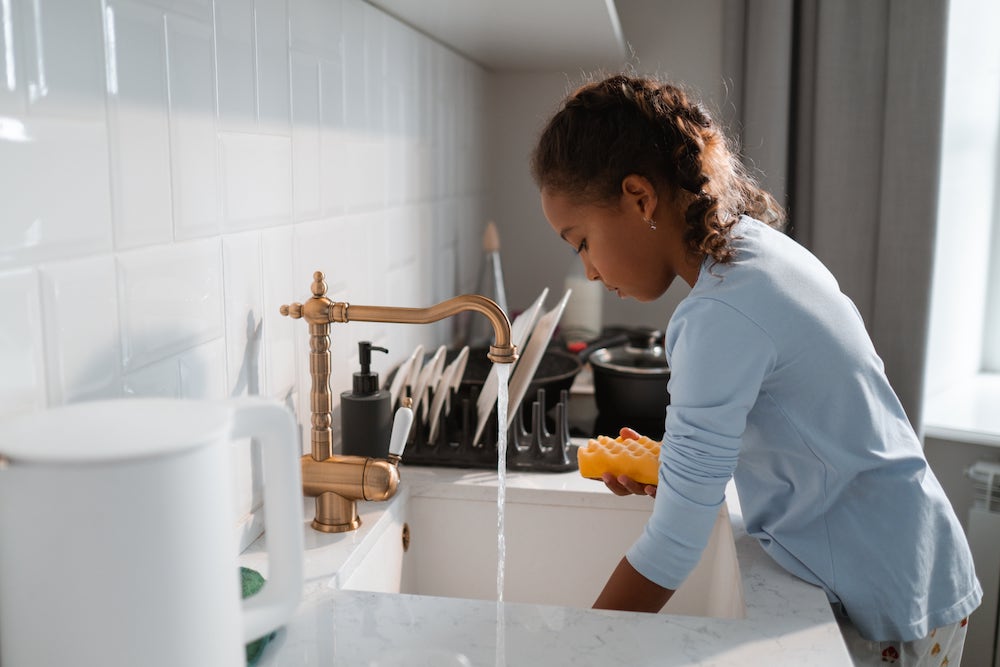
Surprising right?
Many of our children growing up in big cities may never know what it’s like to scrub a dish, wash a window, or mop a floor. We might feel like there are more important things to do to build their knowledge and their character. Lythcott-Haims explains that those children who do get their hands dirty, Jednakże, may reach a level of success in life that surpasses their no-chore-doing peers. That is because it teaches students how to contribute and step up when work needs to be done, and that doing the “grunt work” that others might scoff at, because it is what is best for all, is what gets noticed in the workplace.
The workplaces of the high-achievers who took part in the Harvard Grant Study were notable, such as the White House, where participant President Kennedy worked, and the editor’s office where Ben Bradlee sat as editor of The Washington Post. We can assume that their parents, like us, had to prod and plead for the chores to be done, and accept that even if they were done, they might not have been done well; and that’s okay.
The important thing, as Lythcott-Haims points out, is that by doing chores, children realize that they, “…have to do the work of life in order to be part of life.” They realize that life does not just happen to them, and for them, but with them.
If your children are already doing chores as part of their daily summer routine, bravo! You are on the right track. If not, no need to panic. It is never too late to introduce chores into the lives of our children. Here are some tips to help get you started!

Let Them Be a Part of It
When introducing the concept of your children completing chores to help, have a “family meeting” where everyone is present to discuss what will be expected of your children and why. You can ask your child to help you write a list of chores they could potentially help with around the house. They might surprise you with their enthusiasm as doing chores is very exciting for some children because it makes them feel empowered and helpful (two things we often like to feel as adults).
Game-ify It
To make things fun, because fun makes everything better, you or your child can write the chores on popsicle sticks and each day your child can choose one stick from the jar. That will be their chore for the day! If you have more than one child at home, you can always turn cleaning into a competition by setting a timer and seeing which child can clean the most toys in the given amount of time, for example.
Reward It
As parents, we are rewarded for our contributions at work with a salary. Shouldn’t our children also be rewarded for their hard work? One idea is that if your child completes all of his or her chores for the week, he or she can choose a small toy from a “treasure box” filled with small toys. Another option could be that if your child consistently completes chores for a month, they can choose an extra special family outing.
Teaching our children to do chores is not always easy, but the potential benefits are worth the time and effort. We hope you found our tips useful, and that they can help lead to a positive experience for you and your child. Happy cleaning!
Miło nam poinformować o nowym letnim klubie książki, tylko dla rodziców! Lato to idealny czas na przeczytanie książki, którą zawsze chciałeś przeczytać, ale nie miałem na to czasu. Tego lata, zapraszamy do włączenia się w lekturę Jak mówić, żeby dzieci nas słuchały i jak słuchać, żeby dzieci mówiły.
Wiemy, że nie zawsze jest łatwo nawiązać kontakt z naszymi dziećmi ze względu na wymagania szkoły, praca i życie codzienne. Czasami nasze obawy dotyczące przyszłości utrudniają nam życie tu i teraz. Jednakże, Jedno możemy zagwarantować: nigdy więcej nie będziemy mieli szansy doświadczyć dzieciństwa z własnymi dziećmi, i nie chcemy przegapić tego cennego czasu. Więc, how can we make the most of it and have meaningful conversations with our children that will strengthen our bond and help our children feel supported? These are big questions many of us have.
To help us answer these important questions, we invite you to join us in reading one of the most popular parenting books of all time, written by Adele Faber and Elaine Mazlish. How to Talk So Kids Will Listen and Listen So Kids Will Talk, which teaches us how to accept our children’s feelings, as by not doing so we could be unwittingly causing bad behavior. It also teaches us positive ways to encourage cooperation, as well as independence, autonomy, and self-confidence. Są to wszystkie składniki potrzebne do pielęgnowania pozytywnych relacji rodzic-dziecko, które rzeczywiście pomogą wyrosnąć z naszych dzieci na pewnych siebie i zdolnych dorosłych.

Jak to będzie działać?
Pierwszym krokiem jest skontaktowanie się z jednym z naszych Konsultantów Edukacyjnych w celu rejestracji. Rejestracja jest BEZPŁATNA i otwarta dla każdego! Od 1 lipca utworzymy czat grupowy, podczas którego będą odbywać się treści studiowania książki i udostępnianie treści. Lindsey Dobrze, nasz menadżer ds. edukacji, dołączy do grupy również jako rodzic, ponieważ jest mamą dwóch chłopców, w wieku 4 I 6, kto będzie się uczył razem z Tobą. Będzie także pomagać w prowadzeniu cotygodniowych dyskusji.
Książka jest dostępna w języku angielskim i chińskim i jest łatwo dostępna w druku, e-book, lub formaty audiobooków.
Istnieją dwie możliwości wyboru sposobu, w jaki chcesz wziąć udział:
Harmonogram czytania wygląda następująco:
Tydzień 1: Rozdziały 1 & 2
Tydzień 2: Rozdziały 3 & 4
Tydzień 3: Rozdziały 5 & 6
Tydzień 4 Rozdziały 7 & Posłowie
Pod koniec miesiąca, zorganizujemy warsztaty online prowadzone przez Doradcę Szkolnego, Regina Wehner. Na warsztacie, Regina podzieli się dodatkowymi informacjami i strategiami, które możesz zastosować, aby wzmocnić swoją relację z dzieckiem.
O Reginie Wehner

Regina Wehner jest licencjonowanym doradcą szkolnym, który od ponad roku współpracuje z uczniami gimnazjum 16 lata. Pochodzi ze Stanów Zjednoczonych, mieszka z mężem i 2 dzieci, wieczność 10 I 12, w Pekinie, Chiny.
Regina pracuje w Western Academy w Pekinie (WAB), zróżnicowaną szkołę międzynarodową. Dużą częścią roli doradcy szkolnego jest pomaganie uczniom w poznawaniu siebie i innych w miarę ich rozwoju. Regina organizuje także comiesięczne Poranki Kawowe dla Rodziców, podczas których rodzice mogą dowiedzieć się więcej o zmianach rozwojowych swoich dzieci i sposobach komunikowania się w okresach przejściowych.
Skontaktuj się z nami już dziś, aby dołączyć!
Helping Your Child Learn New Vocabulary
Research indicates that if we want students to succeed in the academic context, on important assessments and high-stakes exams, as well as their future careers, we must help them develop their vocabulary. The reason for that is this: our understanding of new information is directly linked to our understanding of the vocabulary used to communicate that new information.
Dla studentów, increasing their vocabulary is one key to success in mastering a language; the more words we know, the more words we understand, and the more words we can use in our writing to make it more impactful and effective. Jednakże, learning now vocabulary is sometimes viewed as a tedious or elusive process. Sometimes parents are not sure how to guide their children, especially as the way we approach vocabulary study study may vastly differ from the way parents studied it when they were in school.
Don’t worry, Reach Out is here to help! Let’s explore vocabulary acquisition (the process of memorizing and applying new vocabulary), and we’ll tell you how you can help your child build their vocabulary!

Talk About It!
It might seem overly simple, but when it comes to learning new words, one effective way young people do it is by talking with others. Children learn new words best when they are in context, such as in a conversation about a certain topic. They can infer a bit of new words’ meanings based on how they are used along with the other words they are already familiar with.
You have likely been interrupted by your child on many occasions when you use unfamiliar vocabulary and they curiously ask, “What does disaster mean?” You might have been referring to the state of their bedroom (as in it is a complete mess), and by taking a moment to explain the multiple meanings of disaster to them, you will not only have taught them a new word to describe a messy room, but also a failure or a naturally occurring phenomenon, such as a natural disaster.
Więc, talking with your child is a great way to teach them new words!
Explore It!
Students generally understand that they can use a dictionary or a translator if they encounter a word they do not know, but sometimes even the definition of a word might leave them with more questions than answers.
In our experience, many students do not utilize one very important tool for learning and applying new vocabulary, and that tool is a thesaurus! If you notice your child overusing a word when speaking or in their writing, for example, “pretty”, “cute”, “good”, or “bad”, then take some time to show them how to use a website such as thesaurus.com to look those words up. When they search for the word such as “pretty” they will see that there are so many interesting and unique words to use instead! I
In our experience, students really enjoy using new vocabulary, and feel empowered to know there is a tool to help them make their words mightier.
Play!
Having fun while learning isn’t just something teachers do to make students happy, it’s actually been proven by neuroscience to be an effective way to help students learn more and more deeply. Research shows that when students are both stimulated and challenged, their brains release dopamine. Dopamine is a neurotransmitter that stimulates the memory centers and promotes the release of acetylcholinem, which increases focused attention.
In our courses here at Reach Out, vocabulary instruction is an important part of each lesson. We also have courses launching this summer, Vocabulary Builder Levels 1-3, in which we will focus exclusively on helping your child expand their vocabulary knowledge with challenging new words. While the words chosen offer the challenge, tools like Quizlet and games such as Guess Who and Sentence Racer provide students with the chance to interact in a meaningful and engaging way.

How do we know these methods are effective? Because our decades of experience, and study of educational psychology and methodology have taught us how students learn best!
We would love to help your child learn new vocabulary as one of the ways he or she can become an effect more effective and successful reader, writer, and speaker. To learn more about how we can help, contact one of our Education Consultants today!
Jeśli szukasz bardziej zindywidualizowanej usługi edukacyjnej, Reach Out oferuje usługi indywidualne z naszymi doświadczonymi edukatorami!
Co oferujemy?
Nasi nauczyciele oferują szeroką gamę przedmiotów indywidualnych, w tym języka angielskiego, Nauki społeczne, i matematyka.
Poznaj naszych wysoko wykwalifikowanych i doświadczonych nauczycieli!

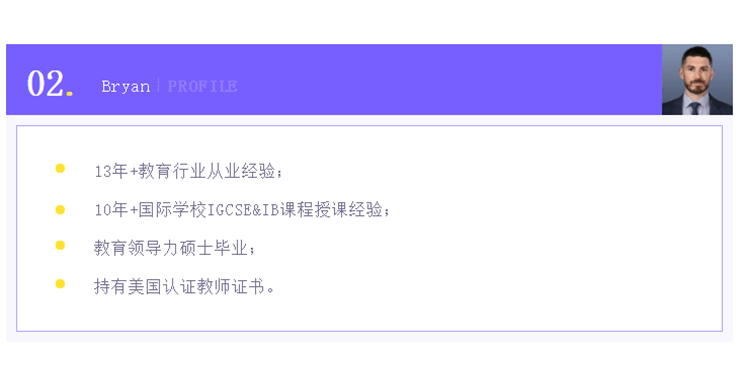


Dlaczego powinienem wybrać usługi 1 na 1?
Być może Twoje dziecko przygotowuje się do studiów za granicą lub aplikuje do nowej szkoły i chciałoby zastosować bardziej intensywne i ukierunkowane podejście, aby udoskonalić swoje umiejętności. Alternatywnie, Twoje dziecko może nie czuć się wystarczająco wyzwaniem w związku z obecnym programem nauczania, i potrzebuje alternatywnego podejścia, bardziej odpowiedniego dla jego poziomu umiejętności.
Istnieje wiele powodów, dla których rodzic może szukać takich usług, i możemy Cię zapewnić, że zawsze będziemy pracować, aby zrozumieć wyjątkową sytuację Twojego dziecka i zapewnić najlepsze dla niego usługi.
Jak to działa?
Dzięki naszemu praktycznemu podejściu, i proces orientacji, ocenimy wiedzę i umiejętności Twojego dziecka na podstawie aktualnych danych z ocen, umiejętność pisania, i więcej. Na podstawie naszych ustaleń, wybierzemy nauczyciela najlepiej dopasowanego do potrzeb Twojego dziecka. Wszyscy nauczyciele Reach Out zostali starannie wybrani, i mają wieloletnie doświadczenie w nauczaniu wymagających programów nauczania, takich jak IGCSE, IB, i AP, w najlepszych szkołach z całego świata.
Nasz proces jest zorientowany na cel. Dowiemy się dokładnie, czego potrzebuje Twoje dziecko, aby osiągnąć swoje cele edukacyjne, a następnie tworzymy unikalną i dostosowaną do indywidualnych potrzeb ścieżkę nauki, która będzie najlepiej odpowiadać konkretnym potrzebom Twojego dziecka.
Co jeszcze dociera do oferty?
Oprócz usług 1 na 1, Reach Out oferuje szeroką gamę kursów specjalnie zaprojektowanych, aby rzucić wyzwanie i zaangażować dzieci z klas od 2. do 8. treściami na poziomie wyższym niż klasa, aby pomóc im przygotować się do rygorystycznych programów, takich jak IGCSE, IB, i AP.
Jak mogę dowiedzieć się więcej?
Aby dowiedzieć się więcej o naszych usługach 1 na 1, Aby dowiedzieć się więcej, skontaktuj się już dziś z jednym z naszych konsultantów ds. edukacji! Z niecierpliwością czekamy na pomoc Twojemu dziecku w osiągnięciu celów edukacyjnych zapewniających świetlaną przyszłość!
Who We Are
As you may have noticed, we have been growing and have some exciting additions to what we offer here at Reach Out. As it has been a while since we introduced ourselves, we thought we would share our story with you to help you better understand who we are and what we do!
Our Mission
Reach Out’s mission is to connect students with expert educators who create and deliver original, inspiring, world-class curricula. We have embarked on this journey so that we may help students understand how to find their own unique voice and uncover the creative and valuable ideas that lie within each of them. With their voices, they have the power to change the world, and we wish to empower them to do so.

Our Vision
Reach Out strives to be an internationally recognized educational institution that allows students to access top level international curriculum and educators, no matter where in the world they are. Our students will be perceptive, curious, and critical thinkers who make informed choices as excellent problem solvers and communicators. Reach Out students will achieve their academic and personal goals and dreams from Primary School to University, placing their brilliant futures within reach.

Our Core Values
These are the principles which shape Reach Out:
Our Story
Reach Out was created by a small group of dedicated mothers, perhaps much like yourself. They were brought together by a common vision for the educational needs of their children. Some were looking for an educational program that could offer their children access to the ideas, teaching philosophy, and methodology that matched what they had experienced while living abroad. Others were looking for an internationalized curriculum that their children could access to enrich their educational experience in China. What they shared in common was a desire for a rigorous program that also opened the doors to creative and critical thinking, self-reflection, and personal expression - the hallmarks of a strong international curriculum. After spending considerable time exploring various options, these moms were not able to find anything that quite met their children’s needs.
Więc, they did what any good mother would do, given the chance, and found their own way to offer their children the best possible learning opportunities designed to help them thrive. They consulted expert teachers and worked with other parents to discover how they could best meet the needs of other children with similar goals. Children, we hope, like yours.
The parents were committed to:
We are happy to say that these mothers have achieved their goal. Today Reach Out boasts a complete line of rigorous yet engaging courses in which students learn deeply while having fun and creating meaningful relationships with their teachers and peers.
All of this because of our founding mothers’ commitment to their children’s education and happiness.
What Makes Us Unique?
While we understand parents have an array of choices when it comes to programs that enrich their children’s education, we believe we offer many unique qualities that are not easily found elsewhere.
Our team consists of highly skilled and experienced educators who have created a unique and rigorous program based on international school standards, which prepares younger students to take on rigorous curriculums such as IGCSE, IB, i AP.
-Our one to one programs and curriculums designed to exceed the educational needs of our students
-Our teaching philosophy of inspiring and empowering students, and teaching methodology of allowing students to explore knowledge widely and deeply while at the same time developing a love of learning
-Our commitment to the long-term success of our students as we strive to equip them with the essential skills they will need to succeed in their future careers and the world beyond school
- The detailed feedback we provide with all of our student assessments, so that students know where they are succeeding and where they might improve, as well as the supplemental materials and instruction needed to help our students close any gaps in understanding
-Our dedication to developing our students’ critical thinking and problem solving skills, which will be essential for their future, as well as the future of our global society
-Our promise to hire all of our teaching and non-teaching staff based on their mutual passion for education
-Our ability to empower students to use the language, knowledge, and skills they acquire to develop themselves beyond the classroom and into curious, lifelong learners who set and pursue challenging, fulfilling, and worthwhile goals.
-Our hands-on, individualized approach to creating a learning path for our students so that no matter what grade level they are when they join us, they will be equipped with the tools necessary to improve and grow rapidly
-Our commitment to empowering our clients with information and experiences that will help them make the absolute best choices for their child's education by offering informative articles, videos and workshops.
Our Curriculum
Our Blue Line curriculum, which includes courses for students in Grades 2 to 8, was designed by expert educators with advanced level degrees in their subject areas who have spent decades in some of the top international schools in the world. We use backwards curriculum design working our way from the first year of programs such as the widely recognized and respected IGCSE program.
As our educators have spent years teaching courses pre-IGCSE, IGCSE, IB and AP or A Levels curriculum, they understand what students need to succeed in those programs. Więc, each aspect of our curriculum has been created to make sure that all of our students enter their first day of Grade 9 feeling confident, equipped, and prepared to meet the demands of these rigorous courses.
We offer a wide range of courses in the subjects of English, Matematyka, History and Geography. See below for more detailed information on our full course offerings.
Additional Services
We are also pleased to announce the creation of our Silver Line, which offers bespoke educational services that take an individualized approach to meeting our students' needs. We begin with a deep assessment of each student's educational goals and needs, and then create and implement a scheme of work with which our expert educators will use to guide your child through the academic challenges of High School in order to prepare them to eventually attend their dream university.
We also offer 1-on-1 services at all grade levels for parents who wish to offer their children more individual care and instruction. Our expert Education Consultants will make sure to match your child with the best educator for his or her specific needs and goals.
Join Us!
We look forward to meeting your family and discussing how you can be part of our Reach Out family; one that learns together, cares for each other, overcomes challenges together, and celebrates successes with one another. Please contact us today to find out more.
We hope to hear from you soon!
Being a parent is hard. In fact, with the changes in our world today, it might just be one of the challenging moments we have had to face in decades. Change leads to uncertainty, and uncertainty can lead to stress. Stress certainly affects all areas of our lives, sometimes it will impact our relationship with our loved ones the most; especially our children.
Our children can be complicated (let’s face it, so can we!), and it is a daunting task to ensure that every move is the “right” one. That all of our conversations, demands, requests, plans, praises and criticisms mean something. Every moment we spend talking to our kids, we hold the hope that these words will be enough to fill our children with the hope of a great future at a time where the future is so uncertain. Times change, and this too shall pass, but one thing we can guarantee is that we will never have a second chance at spending a childhood with our children.
As parents, we often ask ourselves if we are in fact doing the right thing, wondering how we can get through to our kids, trying to understand our children better, and sometimes feeling like a guilty failure because we tell ourselves we are doing it wrong. Oftentimes, that is not the case, but there is no instruction manual on how to raise a child that will work for everyone in all situations. Sure, there is a lot of advice, an overwhelming amount of it, but again, most advice is just that; guidance and recommendations by people who don’t know you or your child. Some of it is helpful, and some of it…not so much.
One thing that we cannot deny though is the importance of a healthy relationship between parent and child.
Research shows that:
It is essential to make the time to nurture a relationship with your child, and perhaps even more imperative, making sure the interactions we have with our children during that time are positive. This is something that many parents find challenging, which is why we created a parent book club for the book Jak mówić, żeby dzieci nas słuchały i jak słuchać, żeby dzieci mówiły by Adele Faber and Elaine Mazlish. Together we learned ways to positively communicate with our children in order to strengthen our bonds. We spent time discussing ideas from the book, as well as had a virtual meet up to role-play some of the strategies from the book. On top of that, we invited Middle School Guidance Counselor, Regina Wehner, to provide parents with a workshop in understanding our child’s cognitive and emotional development.
Here are some highlights we would like to share with you!
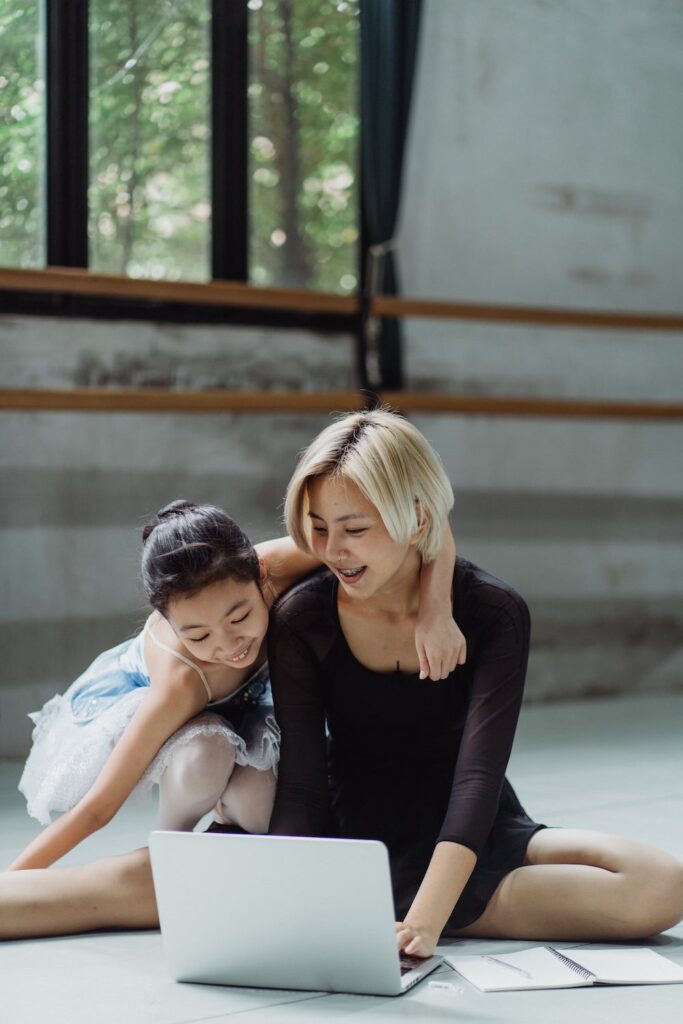
First, from Jak mówić, żeby dzieci nas słuchały i jak słuchać, żeby dzieci mówiły, here are two of our favorite strategies:
Children have difficulty regulating their emotions, as the brain’s emotional regulation center is one of the last to develop. This means that they need our help in the form of compassion and modeling. This can be so challenging, especially when we may have difficulty managing our own emotions at times! We have an easy strategy for you that will only require two things:
When your child comes home upset about something that happened at school, instead of lecturing and offering our sage advice, we can simply listen to their concerns and repeat the ideas back to them. Na przykład, if your child comes home upset and says something like, “Ugh, today Elizabeth and Sarah were so mean to me! They completely ignored me and I hate both of them now!” Instead of saying, “Elizabeth and Sarah are your best friends. It’s not a big deal and I am sure you will be fine tomorrow,” which could invalidate your child’s feelings, you can say, “Oh, I see. Elizabeth and Sarah made you feel a bit left out. That probably made you feel a bit sad and mad.” At this point your child might keep talking and open up to you, which is great! It means they trust you and you are making them feel better. Continue to listen, nod, say, “Mmmhmm,” and repeat what they say. Having you simply listen will likely make your child feel 100% better and ready to face their next challenge!

2. I wish!
Our children often express their desires in the form of wishing they had things they don’t have or wishing things were different than the way they are. Na przykład, children may say, “I wish I didn’t have to do all that homework.” We may reply, “Well, you do and that’s that!” or “It’s what you have to do. It’s your responsibility so you need to do it now!”
This may escalate into a battle of wills as parents feel frustrated that they keep hearing the same complaint and repeat the same reasoning. The children feel frustrated because their opinions are being invalidated and they feel misunderstood. Dobrze, don’t worry, we are here to help! We have a little trick that will help you turn the conversation around, and that is to agree with your child. It may sound counterintuitive, but we have firsthand experience with this trick and it works wonders!
Na przykład, if your child says, “I wish we could go to the park today like I wanted!”
Instead of saying, “I can’t, I am too busy,” or “Yes, but we can’t, it’s raining,” we can say, “I wish we could too! We could go to the park and have a picnic! We could fly a kite and blow bubbles! Why don’t we have a picnic in the living room and after that we can blow bubbles in the bathroom!”
The first part gets the kids excited and their imagination going, taking them to a happy place. The next part makes them feel heard and connected to you.
Teraz, some highlights from Ms. Wehner’s workshop:
*Please help me choose these! :)*
If you would like to join one of our workshops or book clubs in the future, make sure to follow us and stay tuned! We have great things coming up this fall!
Wielu rodziców pyta nas, w jaki najszybszy sposób ich dziecko może poprawić umiejętność pisania. Chociaż mocno wierzymy, że nie ma dróg na skróty, aby zostać naprawdę skutecznym i wykwalifikowanym pisarzem, Jest kilka rzeczy, które uczniowie mogą uwzględnić w swoim pisaniu, aby skuteczniej przenieść go na wyższy poziom. Jak ze wszystkim, co próbuje się opanować, kluczem do sukcesu jest ciężka praca i powtarzalność. Regularne ćwiczenie tych umiejętności pomoże Twojemu dziecku osiągnąć cele edukacyjne.
Ten artykuł będzie pierwszym z serii artykułów, które skupią się na umiejętnościach odpowiednich dla różnych rodzajów pisania. W tym tygodniu, skupimy się na wskazówkach dotyczących pisania opisowego.
Wskazówki dotyczące pisania opisowego:
Pisanie opisowe jest prawdziwą formą sztuki, ponieważ jego celem powinno być stworzenie obrazu w umysłach czytelników. Nie da się opowiedzieć historii opartą wyłącznie na akcji i dialogu, a nie można przekazać głębokiego znaczenia i emocji w wierszu bez namalowania obrazu własnymi słowami.
Skutecznym sposobem na osiągnięcie doskonałości w opisie jest dodanie przymiotników i przysłówków, jeśli to możliwe. Na przykład, jeśli Twoje dziecko pisze historię, może napisać coś podobnego:
„Harry wyszedł na zewnątrz i zaczął szukać swoich przyjaciół”.
Chociaż to zdanie przekazuje podstawowe znaczenie, wpływ, jaki wywiera na czytelnika, jest również zasadniczy. Poprzez dodanie języka opisowego w postaci przymiotników i przysłówków, możemy szybko i skutecznie dodać do zdania obrazy:
„Harry zamknął frontowe drzwi, zatrzaskując je za sobą. Jego serce biło jak szalone, gdy biegał po okolicy, niecierpliwie szukając swoich przyjaciół.
W poprawionym zdaniu, widzimy opisy, które mówią nam nie tylko o akcji, która ma miejsce, ale także pomaga nam poczuć emocje postaci, ważny aspekt opowiadania historii.

Innym świetnym sposobem na zwiększenie efektywności opowieści lub wiersza jest dodanie języka figuratywnego, takie jak porównania. Porównania to porównania wykorzystujące podobne lub as, które mogą pomóc czytelnikowi lepiej wyobrazić sobie, co się dzieje.
Na przykład, Twoje dziecko może napisać coś takiego:
Byłem taki szczęśliwy!
To było takie urocze!
Był taki przestraszony!
Możemy dodać porównania, aby uzyskać jeszcze lepszy wynik:
Cieszyłem się jak kociak w sklepie z włóczkami.
To było urocze jak mała panda bawiąca się na śniegu.
Był przerażony jak królik, który właśnie usłyszał wycie wilka.

Naszą ostatnią wskazówką dotyczącą pisania opisowego jest wybór tak precyzyjnego słownictwa, które przekazuje dokładnie to, co autor chce, aby poczuł czytelnik. Często, uczniowie będą pisać opisy, które są nieco niejasne, ze zdaniami typu:
Był bardzo zmęczony.
Film był bardzo nudny.
Było im bardzo zimno.
W pokoju bardzo gorąco.
Ponownie, zdania te przekazują proste znaczenie, ale w formie opisowej, to po prostu za mało. Skuteczny opis wykorzystuje słownictwo, które ma wpływ, i możemy to osiągnąć, wybierając tylko najlepsze słowa, które oddają najdokładniejsze znaczenie.
Zobacz, jak możemy przekształcić powyższe zdania ze zwykłego w niezwykłe, zastępując część zdania mocnym słownictwem:
Był wyczerpany.
Film był pozbawiony wyobraźni.
Byli zmarznięci do szpiku kości.
Pokój się smażył.
Dobra wiadomość jest taka, że Twoje dziecko nie musi polegać na swojej aktualnej znajomości słownictwa, aby odnieść sukces w tworzeniu zdań takich jak te powyżej. Tezaurus zawiera wszystkie słowa potrzebne do tworzenia zapadających w pamięć opisów.
Mamy nadzieję, że te wskazówki okazały się pomocne! Jeśli chcesz, aby Twoje dziecko nauczyło się wykorzystywać te umiejętności w praktyce pod okiem jednego z naszych pełnych pasji nauczycieli, bądź na bieżąco z nadchodzącymi ogłoszeniami dotyczącymi naszych nowych kursów letnich i jesiennych!
Przyszły tydzień, Przyjrzymy się przekonującym wskazówkom dotyczącym pisania!
Tell us a bit about yourself.
I grew up in five different countries (Sweden, England, Germany, South Africa, and Canada). Integration into a diverse spectrum of cultures growing up has made me see the world with an open mind. I currently reside in Canada and work as both a university lecturer and a Math teacher at Reach Out. Outside of work I really enjoy sports such as badminton and chess, which I played at a competitive level for many years.

What is your educational background and qualifications?
I received a Bachelor of Science Degree from the University of British Columbia (UBC) and an obtained my MSc at the same university. My graduate work involved experimental geoscience where I designed an apparatus to investigate how diamonds reach the surface of the Earth through high velocity magmas. I published articles in two high impact journals and presented the work across Canada and Europe.
During my graduate studies I had the privilege of lecturing a few classes which transitioned into a lectureship position. Teaching at the university level involves lecturing a class of over 200 studenci, which is very different to the work I do at Reach Out, but has helped me develop a dynamic teaching style.
Additionally, I have been teaching Math and Science both privately and through educational organizations for over 6 lata.
Why did you join Reach Out?
I joined Reach Out because the prospect of being able to deliver high quality education from around the globe without border restrictions resonates with me.
I feel that the reason I am committed to staying at Reach Out is more important. The personalized classes being delivered has allowed me to connect with the students, making their progression much more meaningful to me. Some students have been together with me through multiple grade levels and I feel immensely proud to have played a role in their education.
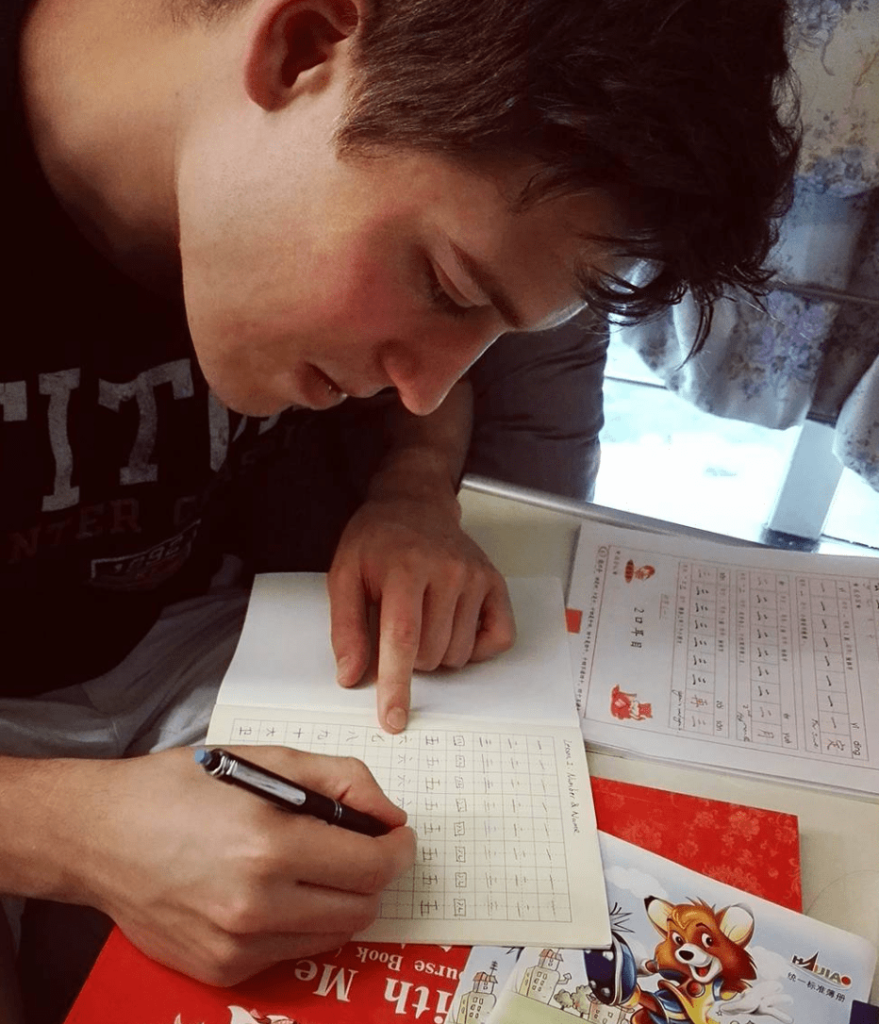
What is your educational philosophy?
Having a background in experimental science has allowed me to see value in making breakthroughs through experimentation. By allowing students to experiment with different methodologies while offering guidance is an extremely effective way of teaching students to not be afraid of failure. Richard Fuller correctly said, “There is no such thing as a failed experiment, only experiments with unexpected outcomes.” Students often start my classes afraid to answer questions, discuss with their classmates, or write on the board since they don’t know the answers. Since I am always more focused on solutions rather than answers, students’ are rewarded for trying new techniques, discussing failed methods, and asking questions about their classmates’ work. I found this to produce a phenomenal learning environment and takes a lot of pressure off the students.

What is your favorite thing about teaching Math?
My favorite thing about teaching Math is the exciting challenges it provides. After teaching Math for many years, I have come to realize that students see the world from a unique perspective, which more often than not, is very different from my own. This diversity produces a wide spectrum of learning styles and requires me to stay very flexible with the methodologies I use in my teaching.
Math is a complex subject which has provided us with a universal language to better understand the universe that surrounds us. Having a good problem solving ability is a byproduct of learning Math and crucial for success in the modern world. For these reasons I have the responsibility to transform a traditionally dry and boring subject into something exciting by creating compelling lessons and using creativity to inspire my students. This will always be something I love about my job.
Who is your favorite mathematician and why?
This is a tough question, and it’s hard to pinpoint one Mathematician since I utilize the works of so many Mathematicians in just one lesson. If I had to pick it would be either Johannes Kepler or Nicolaus Copernicus since I also love astronomy. Their Math not only challenged everything that was believed about our solar system at the time, but also formed the foundations for understanding planetary motion. Space travel has relied heavily on these concepts.
If you could only give parents one piece of advice when it comes to helping their child improve in Math, what would it be?
One thing I have worked on a lot with my students, is getting them to explain their solutions to me regardless of how easy it may seem. Being able to arrive at the correct answer in certain school curriculums may not require a complete understanding, but being able to explain a solution well does require a good understanding. Make sure that your child is always showing very clear steps in their work and that they can explain their steps to you. This certifies understanding and shows they are prepared for questions which test the same concept but may be worded differently.
What is one fun fact about yourself?
I really like learning languages! After growing up in many different countries I can speak English, Swedish, and German fluently. For the past two years I have been working to add Chinese to my collection and have enjoyed the unique challenges that learning this complex language has provided me with.
The Secret Garden is a piece of classic literature that has been part of an untold number of childhoods (if you missed our article on why children should read classic novels, see it linked below!). It is a powerful tale of friendship and discovering oneself that resonates with our souls.
The Secret Garden is about a young girl named Mary Lennox who loses her family and everything familiar with her due to a cholera outbreak in India, where her father was working as a British Army Captain. As a child, Mary was quite neglected, but indulged by family’s servants, so she was a spoiled child with a terrible disposition. She had very few traits that would help her cope with a new life in England, where she was sent to live with a grouchy distant relative, Pan. Craven.
Pan. Craven had very strict rules for Mary to follow at her new home at Misselthwaite Manor in Yorkshire, which included her being forbidden to enter various rooms inside the giant mansion, as well as forbidden to enter one of the gardens on the sprawling property, which belonged to his beloved late wife. As Mary begins to explore her new home, she begins to find a sense of happiness and regains her health after being sickly for much of her childhood. After a robin helps her find the key to the secret garden, she finds a sense of purpose in restoring the garden, much as she restores her inner self. Through the thorns and dried leaves of winter, she finds much more lies within.
Aided by new friend Dickon, Mary develops her first friendships, and uses her newfound strength and kindness to help her bedridden cousin Colin, whom she finds tucked away in the manor. Friendship strengthens both Mary and Colin, and in the end, everyone witnesses a miracle only made possible by these close bonds and belief in oneself, two very important themes in the novel.
Young people will love reading this fantastic story of friendship, overcoming obstacles, and experiencing the healing power of nature. The characters and the lessons they teach us will surely touch your child and help them experience the power of a great story.
If you would like an opportunity for your child to experience this story with others, we are happy to let you know that we will be reading The Secret Garden as the first novel in our Young Classics Level 2 Course this summer.
In the course, we not only read the novel, but we also learn and apply new vocabulary from the book, discuss important literary techniques used by the writer, and practice writing summaries, a key skill that many students find challenging
If you are interesting in learning more about Young Classics, or and of our other excellent and engaging courses, contact one of our Education Consultants today! We hope to work with your child very soon!
Literature study is an important aspect of any excellent academic program, and that is because it helps to teach students a wide range of knowledge and skills that are essential for success in many areas of life. While studying literature, students learn about important events and people throughout history, they consider cultural perspective and increase their own understanding of acceptance of different ideas and beliefs, and they learn how to analyse the words of others in order to form a deep understanding of new ideas and ways of communicating. In short, it exposes students to a toolbox of ideas, techniques, strategies, theories, and more that they will carry with them throughout their life, shaping the way they approach the world.
Why do we offer this course?
Reach Out students typically pursue high school programs such as IGCSE, which includes challenging courses such as English Language and Literature and English as a First Language. Later, most of those students will take on the challenge of IB and AP level programs, in which they must take on the task of reading a variety of literature. Our aim is to expose students in upper primary and middle school to a wide range of advanced literature so that by the time they reach high school they possess the knowledge and skills to hit the ground running, and therefore achieve to a higher level.
This course is designed for Grade 7-9 studenci.
The Objectives of our Advanced Literature Course are to:
✪ Enhance students’ ability to understand and discern literary techniques used English and American literature, and the ability to communicate the effects of those techniques;
✪Improve children's literary comprehension skills and increase their understanding of British and American culture;
✪ Under the guidance of our expert educators, learn the power of language and storytelling in a challenging yet engaging way.
Meet Our Teachers
*Insert teacher bios here for Barry, Anthony, and John*
Our Book Selections:
Cry the Beloved Country by Alan Paton

Set in South Africa in the 1940s, award-winning Cry the Beloved Country tells the story of a Zulu Pastor, Steven Kumalo, who travels from his village to the city of Johannesburg. Along his arduous and heart-wrenching journey, he discovers that his sister and son have found themselves in terrible situations that he must now face with them. The characters’ vastly different lives become unexpectedly woven together through tragedy during a dark time in South Africa’s history. Jednakże, through tragedy and challenges, the true nature of the human spirit can be found and uplift those who need it most.
Dracula by Bram Stoker

The legend of Dracula has loomed large in the minds of readers and movie-goers for generations. Bram Stoker based the infamous character of Dracula on the legend of the real life ruler of Wallachia, Vlad the Impaler. Stoker was able to take this dark corner of history and turn it into a legendary novel told through journal entries, letters and telegrams. As with any classic, Dracula has stood the test of time because it speaks to something very deep and meaningful within the human psyche.
Of Mice and Men by John Steinbeck
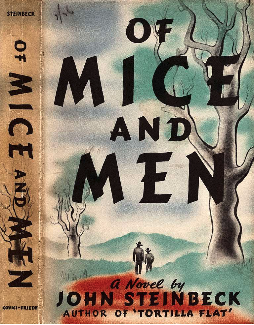
The Great Depression was a defining moment in American history that tested its strength as a nation, and placed the population in a precarious balance between life and death. In what is considered one of the greatest American classics, readers are introduced to two displaced migrant workers, George and Lennie. George is an intelligent young man, while Lennie is mentally disabled. George takes Lennie under his wing as they seek employment where few opportunities exist, trying to survive, yet still dreaming of the day they will have their own land and build a life. Their hopes are dashed when a devastating incident occurs that alters their lives forever.
What Students Will Gain
Develop an early sense of literary appreciation,
See the world from a more mature perspective
British and American classics contain thought-provoking moral and social issues. Reading the most influential classic literature thoroughly helps students become better readers, and begin the process of pursuing self-realization.
Improve understanding of culture and history
Learning allusions from classic British and American literature can help us bridge cultural differences. "The classics have opened the door to different worlds, different cultures, and different historical perspectives. Literature crosses race, culture, religion, and geography."
Self-reflection and personal growth
Many classic literature allude to our lives from the side: books that reflect similarities to our own lives are called "mirrors"; and those that give us a glimpse of different lives are called "windows." Whether it is a "mirror" or a "window", it further enriches the students' life experience and increases the courage and strength to face life.
Join Us!
Contact us to discover more about our course. We sincerely hope to meet your child soon, and develop a love of reading classic literature together.
It’s back to school time and we know parents are getting ready for a new year with new beginnings. The start of a new year is usually met with a mix of excitement and a bit of anxiety, as students and parents look forward to new skills and experiences, but also might feel nervous about new routines and expectations.
Don’t worry, Reach Out it here to help! This year, we have 5 top tips to a fantastic start to the school year.
Understanding how your child’s school approaches education, what curriculum they use, what systems, and standards are used can be overwhelming for non-educators. Spending a bit of time each day reading your school’s website content, handbooks, and other resources can help you feel more confident in understanding what your child is learning at school and how they are learning. It’s also important to attend your child’s back-to-school night and informational sessions to get a better understanding of your child’s program as a whole. It also provides a great opportunity for you to establish a relationship with your child’s teacher. At any time if you still have questions, you can always e-mail your child’s teacher. They are there for you and your child, as they know that a great relationship with parents is a fantastic way to ensure academic, social, and emotional success for all students.
2. Make Sure to Catch Enough Zzzzs Before the ABCs
Sleep is so important for a child’s growth and development, and a lack of it can negatively impact a child’s academic achievement. In fact, research shows that sleep depravation in children can lead to higher rates of anxiety and depression. When we sleep, our brain processes the information from he day, finds the best system to file it away in out memories, and re-charges our systems for a new day. For various reasons, parents often find sticking to an early bedtime difficult, but with a clear routine, and time for adjustment, it can be easy! Children 3-6 years old should be getting 10-12 hours of sleep per day, 7-12 year olds should get 10-11 hours per day, I 12-18 year olds should get 8-9 hours per day. Creating a schedule where children get to bed earlier will make mornings easier as well, hopefully with less stress for both parents and children as they will be well rested and ready to start their day!
3. Ask the Right Questions at the Right Time
Sometimes parents are anxious to know how their child’s day was as soon as they get home from school, especially during the first few weeks. Those weeks are especially exhausting and full of ups and downs as your child learns to navigate new material, new friends, new teachers, and new expectations. Giving them time to come home and decompress is extremely important for their emotional and mental well-being. Once they have had some “me” time, parents can ask specific questions based on what they know they are working on, if they happen to know. They can go through their child’s homework diary with them and help them make a plan on how to tackle each task, as well as share in their enthusiasm for specific subjects, books, or information they also enjoy. Avoid asking, “How was school? What did you learn?” as kids respond much better to more specific questions, such as, “What did you do with your friends at lunch? What was the best part of your day? What was the weirdest or most wonderful thing that happened at school today?” Most importantly, parents should be fully present and listen intently when students answer, so they really feel valued and hear when they share.
4. Let Them Learn From Failure
This one can be extremely hard for parents to allow. We want our children to do well and reach their full potential, which means we might go over each assignment with a fine-toothed comb, correcting every mis-calculation or grammar mistake. Although parents have good intentions when we do this, we are taking away important learning opportunities from children when we do so. Back when we were students, many of our parents were often too busy or didn’t have the knowledge or capacity to help us with our school work, but we found a way to push through and try our best. If children are never given opportunities to fail when they are young, they might resist taking on challenges later in life for fear of failing at them. Jednakże, when we let them fail gently, such as on an assignment or at a little league soccer game, we are teaching them resilience. It’s not the end of the world, and they learn a valuable lesson; that we can try and not succeed, dust ourselves off, and try again next time.
5. Nurture Their Passions
New school years are an exciting time for many reasons, one of them being that they provide children a chance to discover new passions. If they are lucky, they will stumble upon something they truly love, and that they can become fascinated with enough to spend hours on end discovering. Helping a child find his or her passion is not always easy and takes time. Sometimes parents worry if their child focuses too much on a couple of things, and feel they need to expose them to as much as possible to help shape them into well-rounded individuals. Jednakże, if we look at the people who have shaped our world, it was because they had a laser focus on what they were passionate about. It was all they ever did or do. As humans, we naturally gravitate towards what we love most, and as long as it provides some sort of value on top of fulfillment, we should continue pursuing it. Więc, don’t worry if your child protests going to one activity while running out the door to attend another. Maybe the one they love is the most valuable to their growth and development, and the one they don’t like isn’t that necessary after all.
We hope these tips have helped, and we wish you and your child the best in the coming school year! We are excited for the new school year and all of the challenges and hope it will bring.
Reach Out will be with you every step of the way, so be on the lookout for more information and more articles we hope you will love!